
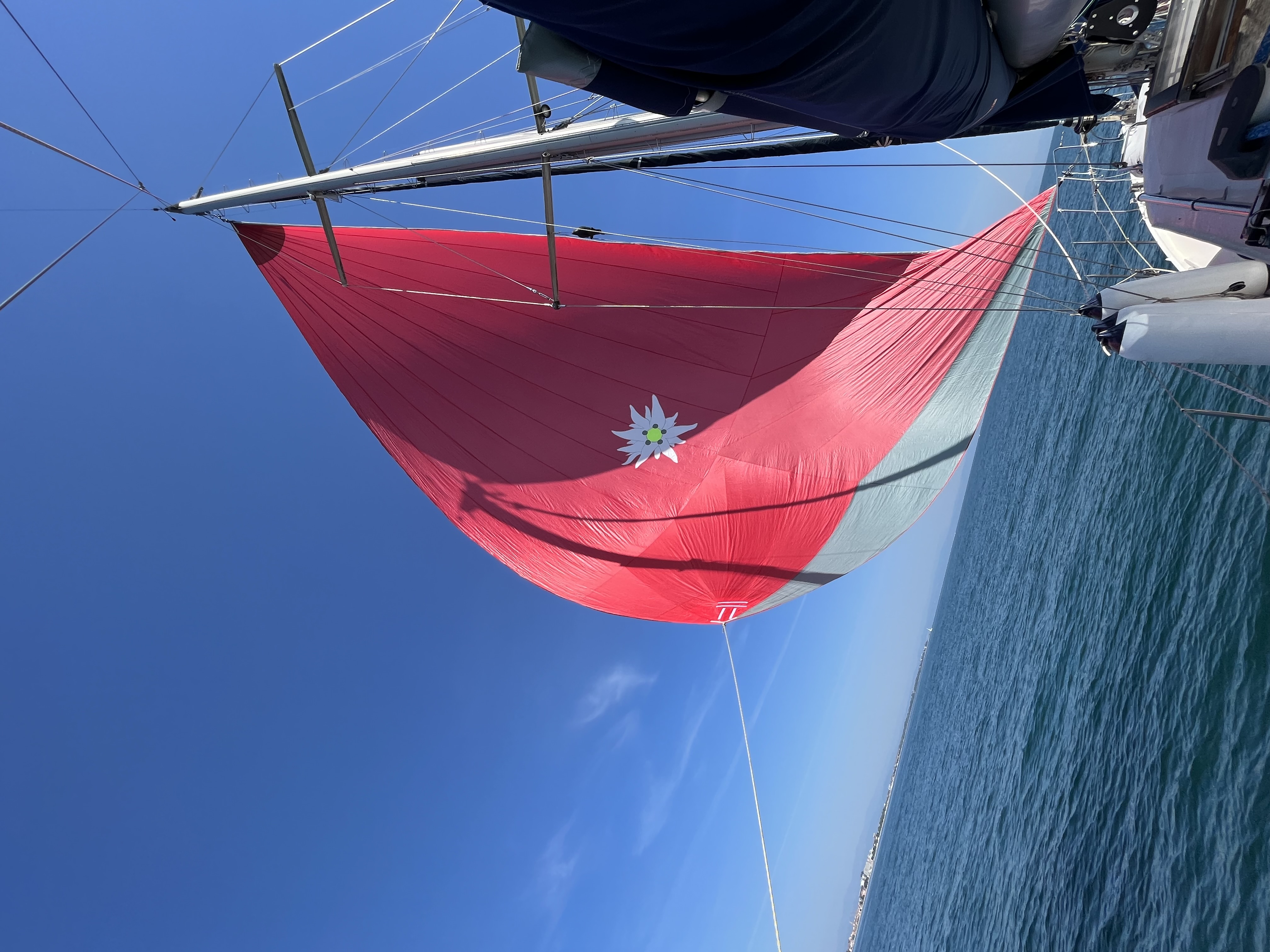
Nun ist es also soweit. Es tut sich ein Wetterfenster auf und wir verlassen nach 8 Tagen Mindelo und starten ins Abenteuer Atlantik Überquerung.
Mindelo hatte erstmalig auf unserer Reise eine gewisse Exotik, war aber an sich nicht besonders spektakulär. Leider mussten wir dort noch ein heftiges Unwetter miterleben das zu einer Schlammlawine führte und den Ort praktisch stilllegte. Strom fiel aus, Wasserpumpen funktionierten nicht mehr, Geschäfte und Restaurants liefen voll. Eine Katastrophe für die Bevölkerung. Wir waren Gott sei Dank nur am Rande betroffen. Ausser einer Luke, die nicht korrekt geschlossen war und zu einer mittleren Überschwemmung im Salon führte, kamen wir glimpflich davon. Daher fiel uns der Abschied dann auch nicht allzu schwer. Nach einem kurzen Tankstop verlassen wir am Mittwoch 13.08.25 die Insel Richtung Brasilien.
Nach allem was wir schon durch haben, ist es ein erhabenes Gefühl nach fast einem Jahr endlich die Atlantik Überquerung anzupacken.
Die ersten 3 Tage Motoren wir durch absolute Flaute. Der Atlantik sieht aus wie ein Badewanne und ich nehme meinen Versuch einen Fisch zu fangen wieder auf. Allerdings erfolglos. 2 Köder werden mir abgerissen, ohne dass ich den Kandidaten der angebissen hat auch nur zu Gesicht bekomme. Am 4. Tag kommt dann endlich der erwartete Wind und beendet meine dilettantischen Versuche. 🥴 Wenn man nach Brasilien segelt hat man leider keinen Passat, so wie Richtung Karibik, also kein komfortables Vorwind Segeln sondern ungemütlicher Am Wind Kurs. Dieser geht vor allem mit Krängung einher und macht Bewegungen und Handgriffe an Bord aufwendig und anstrengend. Es dauerte eine Weile bis wir mit der Einstellung der Segel eine einigermaßen stabile Fahrt hinbekommen. Und bei vollen Segeln eine Wende fahren wenn der Autopilot den neuen Kurs nicht hält ist auch kein Spaziergang. Ich hänge mit meinem gesamten Gewicht am Steuer und kann es trotzdem kaum verhindern dass das Schiff immer weiter anluvt. Schließlich rufe ich in meiner Panik nach Franz der draussen noch an den Segeln arbeitet. Er übernimmt und ich bin durch. Wenn das so weiter geht dann steige ich in Brasilien aus. Ich werde auch prompt Seekrank, bzw. hab mir wohl irgendeinen Virus aus Mindelo mitgenommen und bleibe die nächsten 3 Tage ausgenockt in meiner Kajüte.🤢😵💫 Das geht ja gut los. Irgendwie habe ich mir das anders vorgestellt. Die Euphorie ist verflogen, Überforderung macht sich breit und ich hinterfrage zum wiederholten Mal ob ich mir hier nicht zu viel vorgenommen habe. Allmählich geht es mir dann aber wieder besser und ich beginne mich zu adaptieren.
Unser Kurs nach Fernando de Noronha ist nicht so einfach zu segeln. Wir müssen durch die sogenannte Konvergenz Zone, haben mit wechselnden Windstärken und Strömungen zu kämpfen und müssen Winkel segeln die für unser Boot eigentlich zu steil sind, um den Wende Punkt zum Halbwind zu erreichen. Wenn wir diesen verpassen erreichen wir die Insel nicht, da wir nicht gegen den Wind Motoren können. Zwischenzeitlich diskutieren wir auch alternative Routen, sollten wir mit den Windverhältnissen nicht klar kommen. Guyana/Surinam wäre eine Option. Am Ende gelingt es uns aber Tag für Tag besser uns an die Windverhältnisse anzupassen und als wir dann endlich Wenden und auf dem Steuerbordbug fahren können beginnt der schöne Teil der Überquerung. Wir ziehen mit 3 Segeln und 5.5-7kn Geschwindigkeit dahin. Die „eiserne“ Lady kann richtig laufen.💪 Und so nähern wir uns langsam unserem Ziel. Der Wind bläst beständig und wir finden gut zurück in unsere Routine.
Ein besonderes Highlight der Route ist die Überquerung des Äquators vom Nordatlantik in den Südatlantik. Dies muss natürlich gebührend gefeiert werden mit einer Äquatortaufe und einen hochprozentigen Schluck sowohl für Neptun, damit er uns gewogen bleibt, als auch für die Täuflinge.
2 Tage vor unserer vorraussichtlichen Ankunft stellen wir fest, dass wir mitten in der Nacht die Bucht erreichen werden, was allerdings nicht empfehlenswert ist, da dort vielen Mooringbojen liegen. Man möchte sich ja keine Mooringleine einfahren. Wir versuchen Geschwindigkeit aus dem Boot zu nehmen um unsere Ankunftszeit anzupassen. Segel werden gerefft, allerdings vermindert sich unsere Geschwindigkeit erst einmal nicht signifikant. Was für ein Luxusproblem 😂. Erst als wir die Genua fast komplett wegnehmen verringert sich unsere Geschwindigkeit auf zumindest 4kn. Natürlich kommen wir dann trotzdem im Halbdunkel an und treiben noch bis Sonnenaufgang vor der Insel. Langsam wird die Bucht sichtbar und und die Erkenntnis stellt sich ein: „Wir haben es geschafft“. „Wir haben den Atlantik überquert“. Nachdem der Anker gefallen ist sehen wir im ersten Tageslicht eine große Gruppe Delphine, die jeden Tag in diese Bucht kommt und für die diese Insel bekannt ist. Es ist überwältigend. Und dann stellt sich erste Müdigkeit ein, da wir diese Nacht nicht wirklich viel geschlafen haben.
Ein paar Stunden später lassen wir das Beiboot runter und Franz fährt an Land zum Einklarieren, während ich schon einmal das Boot innen einer gründlichen Reinigung unterziehe.
Am Abend fahren wir dann gemeinsam an Land um unsere Ankunft bei einem Abendessen gebührend zu feiern. So setze ich nach 14Tagen und 17h zum ersten Mal wieder einen Fuß auf festen Boden. Morgen werden wir uns mal mit der Infrastruktur im Ort befassen und unsere Schulden beim Hafenkapitän bezahlen. Mit Karte ist da nicht. Nur Bares ist Wahres und wir müssen uns auch noch mit Landeswährung eindecken.
Anbei noch ein paar Fakten zur Überfahrt:
Distanz: 1752,9 nm
Dauer: 14Tage 17h
Geschwindigkeit Durchschnitt: 4.96kn
Wasserverbrauch: 26l/Tag für 2
Schäden: Pumpe in der Küche, Lüfter Motorraum (mal wieder), Mastrutscher Großsegel
So now the time has come. A weather window is opening up and after eight days we are leaving Mindelo and setting off on our Atlantic crossing adventure.
Mindelo was the first place on our trip to have a certain exotic feel, but it wasn’t particularly spectacular in itself. Unfortunately, we experienced a violent storm there that led to a mudslide and practically shut the place down. The power went out, water pumps stopped working, and shops and restaurants were flooded. It was a disaster for the population. Thankfully, we were only marginally affected. Apart from a hatch that wasn’t closed properly and led to moderate flooding in the saloon, we got off lightly. So it wasn’t too difficult for us to say goodbye. After a quick refueling stop, we leave the island on Wednesday, August 13, 2025, heading for Brazil.
After everything we’ve been through, it’s a sublime feeling to finally tackle the Atlantic crossing after almost a year.
For the first three days, we motor through absolute calm. The Atlantic looks like a bathtub, and I resume my attempt to catch a fish. However, I am unsuccessful. Two baits are torn off without me even seeing the candidate that took the bait. On the fourth day, the expected wind finally arrives and puts an end to my amateurish attempts. 🥴 Unfortunately, when sailing to Brazil, there are no trade winds like there are when sailing to the Caribbean, so there is no comfortable downwind sailing, but rather an uncomfortable close-hauled course. This is accompanied by heeling, which makes movements and maneuvers on board difficult and exhausting. It took a while before we managed to achieve a reasonably stable voyage by adjusting the sails. And tacking under full sail when the autopilot doesn’t hold the new course is no walk in the park either. I hang on the helm with my entire weight and still can’t prevent the ship from continuing to luff. Finally, in my panic, I call out to Franz, who is still working on the sails outside. He takes over and I’m done. If this continues, I’ll get off in Brazil. I promptly get seasick, or rather, I must have picked up some virus in Mindelo and spend the next three days knocked out in my cabin.🤢😵💫 That’s a great start. Somehow, I imagined it would be different. The euphoria has evaporated, I feel overwhelmed, and I question once again whether I have taken on too much here. Gradually, however, I start to feel better and begin to adapt.
Our course to Fernando de Noronha is not so easy to sail. We have to pass through the so-called convergence zone, contend with changing wind speeds and currents, and sail at angles that are actually too steep for our boat to reach the turning point to reach the half wind. If we miss this, we won’t reach the island because we can’t motor against the wind. In the meantime, we are also discussing alternative routes in case we can’t cope with the wind conditions. Guyana/Suriname would be one option. In the end, however, we manage to adapt better and better to the wind conditions day by day, and when we finally turn and can sail on the starboard bow, the beautiful part of the crossing begins. We sail along with 3 sails and a speed of 5.5-7 knots. The “iron” lady can really run.💪 And so we slowly approach our destination. The wind blows steadily and we get back into our routine.
A special highlight of the route is crossing the equator from the North Atlantic to the South Atlantic. Of course, this must be celebrated with an equator baptism and a high-proof drink for both Neptune, so that he remains favorable to us, and for the baptized.
Two days before our expected arrival, we realize that we will reach the bay in the middle of the night, which is not recommended, as there are many mooring buoys there. We don’t want to get caught in a mooring line. We try to slow down the boat to adjust our arrival time. The sails are reefed, but our speed does not decrease significantly at first. What a luxury problem 😂. Only when we almost completely remove the genoa does our speed decrease to at least 4 knots. Of course, we still arrive in semi-darkness and drift off the island until sunrise. Slowly, the bay becomes visible and the realization sets in: “We made it.” “We crossed the Atlantic.” After dropping anchor, we see a large group of dolphins in the first light of day, which come to this bay every day and for which this island is famous. It is overwhelming. And then the first signs of tiredness set in, as we didn’t really sleep much last night.
A few hours later, we lower the dinghy and Franz goes ashore to clear customs, while I give the boat a thorough cleaning inside.
In the evening, we drive ashore together to celebrate our arrival with a dinner. So, after 14 days and 17 hours, I set foot on solid ground again for the first time. Tomorrow, we will take a look at the infrastructure in the village and pay our debts to the harbor master. Cards are not accepted there. Only cash is accepted, and we also have to stock up on local currency.
Here are a few facts about the crossing:
Distance: 1752.9 nm
Duration: 14 days 17 hours
Average speed: 4.96 knots
Water consumption: 26 l/day for 2
Damage: Pump in the kitchen, engine room fan (again), mainsail mast slide


