Nun ist es also soweit, wir tun es wirklich und fahren nach Patagonien. Hätte mir das jemand vor einem Jahr gesagt, ich hätte es mir nicht vorstellen können. Da hatte ich schon bei 20kn (c.a. 37kmh) Wind Panik dass das Schiff untergeht und wir ganz bestimmt alle sterben. Aber wie heisst es so schön, man wächst mit seinen Aufgaben und heute entlocken mir 20kn nur noch ein Gähnen und die Frage, wo bleibt denn jetzt der Wind. Faszinierend wie sich Perspektiven ändern und Grenzen verschieben. Und unsere Grenzen haben sich definitiv in diesem Segelrevier neu definiert.
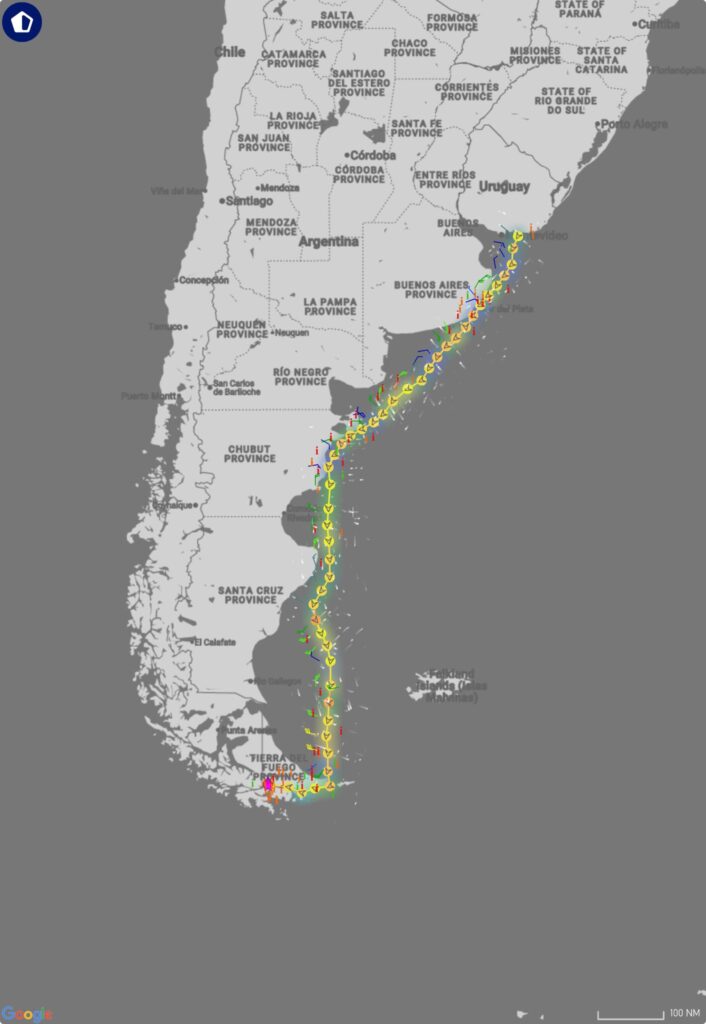
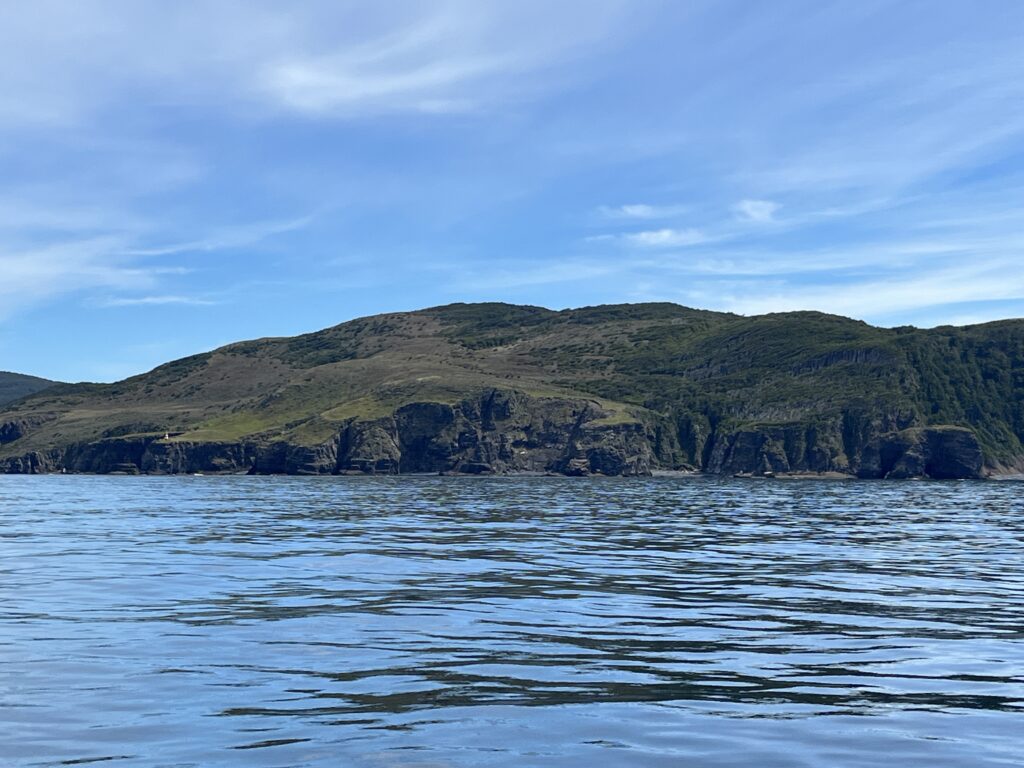
Wir verlassen also Mar del Plata und geniessen erst einmal ein paar Stunden tolles Segeln, so kann es weitergehen (wissen wir eh dass das Wunschdenken ist 😉). Dauert auch nicht lang und wir haben eine flott tropfende Stopfbuchse (eine Stopfbuchse dichtet die rotierende Propellerwelle beim Durchgang durch den Rumpf ab, um Wassereinbruch zu verhindern). Das ist definitiv eine Stelle, wo man nicht möchte dass Wasser ins Boot kommt. Also bergen wir die Segel und stoppen das Boot, damit sich die Welle nicht mehr dreht und Franz versucht mit der Strohhalm Methode das Problem zu lösen. Ganz können wir das Tropfen nicht verhindern, aber wesentlich verlangsamen. Daher entscheiden wir weiter zu fahren und nicht nach Uruguay zurück zu kehren, um das Problem an Land lösen zu lassen. Dazu muss man wissen, dass auf unserem weiteren Weg Möglichkeiten für Reparaturen an Land immer seltenere werden, von dem Erwerb von Ersatzteilen ganz zu schweigen. Und natürlich steht uns auch schon wieder Starkwind von vorne bevor, weshalb wir uns mit der Bahia Janssen unseren ersten Stopp zum Aussitzen ausgesucht haben. Auf dem Weg dorthin bekommen wir es dann noch dicke, die ganze Nacht Am Wind Kurs mit Starkwind immer über 30-40kn. Komfortabel ist echt anders. Ich kann ja wirklich immer und in jeder Position schlafen, aber da hab selbst ich keine Position mehr gefunden, in der ich nicht durch das ganze Bett gerutscht bin. Entsprechend froh sind wir, als wir nach 650sm Bahia Janssen erreichen und unseren Anker fallen lassen. Die Bucht ist zwar nicht super geschützt und dass Boot rollt schon erheblich, aber der Ankergrund ist gut und der Anker hält bombenfest. Auch hier gibt es Pinguine und ich wusste bis dahin gar nicht wie diese Tiere stinken können. Wir liegen c.a. 800m vom Ufer entfern und riechen es sehr deutlich 😖. Am nächsten Tag nach Mittag geht es schon weiter Richtung Süden. Die Landschaft verändert sich zusehends. Weniger Infrastruktur, mehr Natur. Draussen wird es immer frischer und wir sind wieder einmal dankbar für unser festes Steuerhaus, wo wir warm und trocken sitzen. Auch unsere Dieselheizung und die Motorheizung kommen immer öfter zum Einsatz.
Nachdem das aktuelle Wetter bereits vorgibt, dass wir nicht bis Ushuaia durchfahren können, fällt unsere Wahl für den nächsten Stopp auf die Bahia Thetis. Auf unserem Weg dorthin müssen wir immer wieder mit Windwechseln und daher mit verschiedenen Segelstellungen arbeiten um weiterhin Geschwindigkeit zu machen. Ab und an kommt uns dann auch noch Strömung entgegen, die uns bremst. Ist schon nicht so einfach hier. Aber die seltenen Commerson Delphine, die uns begleiten, reissen es dann wie immer raus. So geht es dahin, mal mit Segeln und Motor, mal nur mit Motor oder Segeln, je nach Wind. Zum Glück gibt es keine große Welle, immer so zwischen 1-2m und das Wetter passt auch einigermaßen, bis sich plötzlich seitlich von uns eine schwarze Wand aufbaut. Zum Glück sind unsere Segel schon gerefft (verkleinert), wir hätten keine Zeit mehr gehabt, so schnell wie diese Unwetterzelle uns erreicht. Mit bis zu 45kn(83kmh) in den Böen geht mal kurz die Welt unter. Wir sind auf einem Halb Wind Kurs (Wind 90 Grad von der Seite) unterwegs und das Boot krängt (hat Seitenlage) mit 25-28 Grad. Ein bisschen gruselig ist es schon, aber auch total beeindruckend, wie unsere Amber mit Autopilot da durch schießt, mit der Hand hätte ich das nicht Steuern wollen 😵💫. So schnell wie es gekommen ist, verzieht sich das Unwetter auch wieder und der Spuk ist vorbei. Den Rest des Weges legen wir in Ruhe zurück und um 06:40 an diesem Morgen, nach 640sm, fällt der Anker in der Bahia Thetis. Auch diese Bucht ist sehr schön und um uns herum nur Natur pur. Da die Wetter und Wind Vorhersage nicht wirklich optimal ist, beschließen wir, uns hier nicht zu lange aufzuhalten sondern am nächsten Tag sehr früh wieder zu starten. Als dann um 4:00 der Wecker klingelt, schaffen wir es tatsächlich nicht uns aufzuraffen. Offensichtlich fordert die zurückliegende Strecke doch einen gewissen Tribut. Wir drehen uns nochmal um und verschieben die Abfahrt um einen Tag. Die Konditionen verbessern sich damit nicht, aber hinterher ist man immer schlauer. Den zusätzlichen Tag nutzen wir zum Ausruhen, Vorkochen und Brotbacken. So heisst es dann am 19.01. Anker auf und schon gibt es die erste Schwierigkeit. Hier in dieser Gegend gibt es sogenannte Kelpfelder. Kelp ist eine zähe Braunalgenart, die waldähnlich am Meeresboden wächst und eine Höhe von bis zu 60m erreichen kann. Man sollte tunlichst vermeiden mit den Boot dort hineinzufahren oder den Anker dort zu plazieren, da sich der Kelp im Propeller oder Anker verfangen kann und dann heraus geschnitten werden muss. Im Regelfall bedeutet dass, das jemand von der Crew ins Wasser muss. Die Temperaturen laden hier definitiv nicht dazu ein 🥶. Als also unser Anker freigebrochen ist, lässt sich das Boot auf einmal nicht mehr nach rechts steuern. Irgendwas blockiert, aber wir haben Glück. Was immer es ist, es lässt sich mit ein paar energischen Ruderbewegungen lösen. Das Ruder bleibt zwar weiterhin nach rechts schwergängig, aber wir können das Boot wenden und die Bucht verlassen ohne in ein Kelpfeld zu fahren 😅. Draussen stoppen wir und gehen der Sache auf den Grund. Der Steuerzug rechts hat sich gelöst. Ist nicht neu, hatten wir schon und lässt sich beheben. Die Belastung von Wind und Welle der vergangenen Tage macht sich auch beim Material bemerkbar.
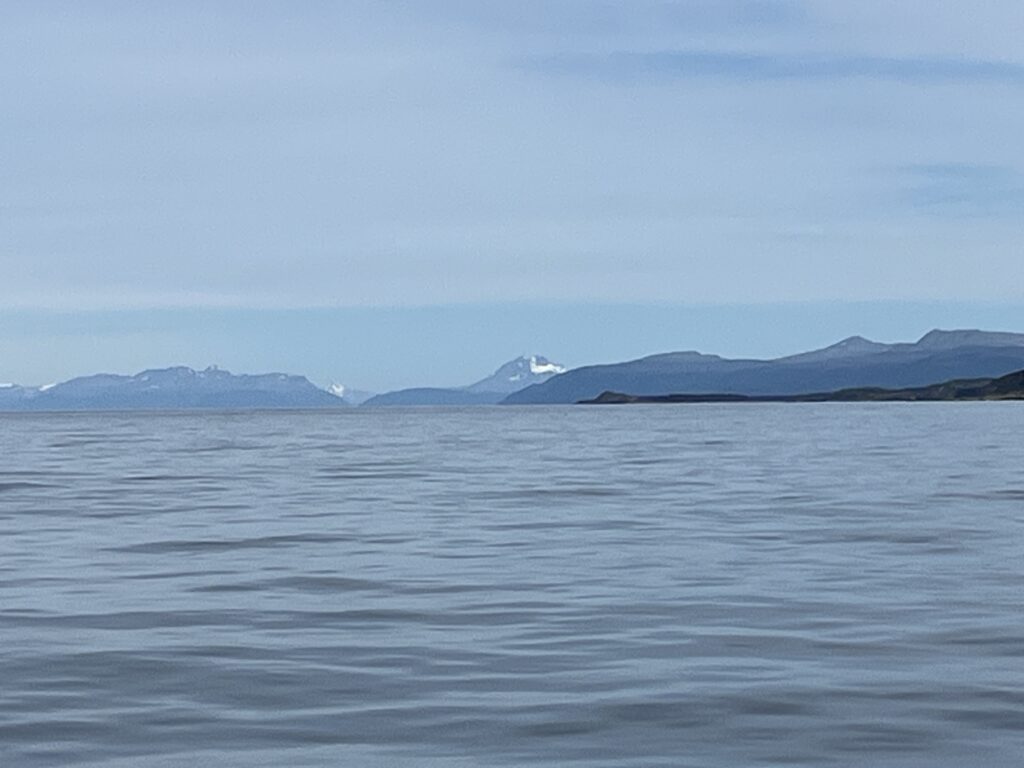
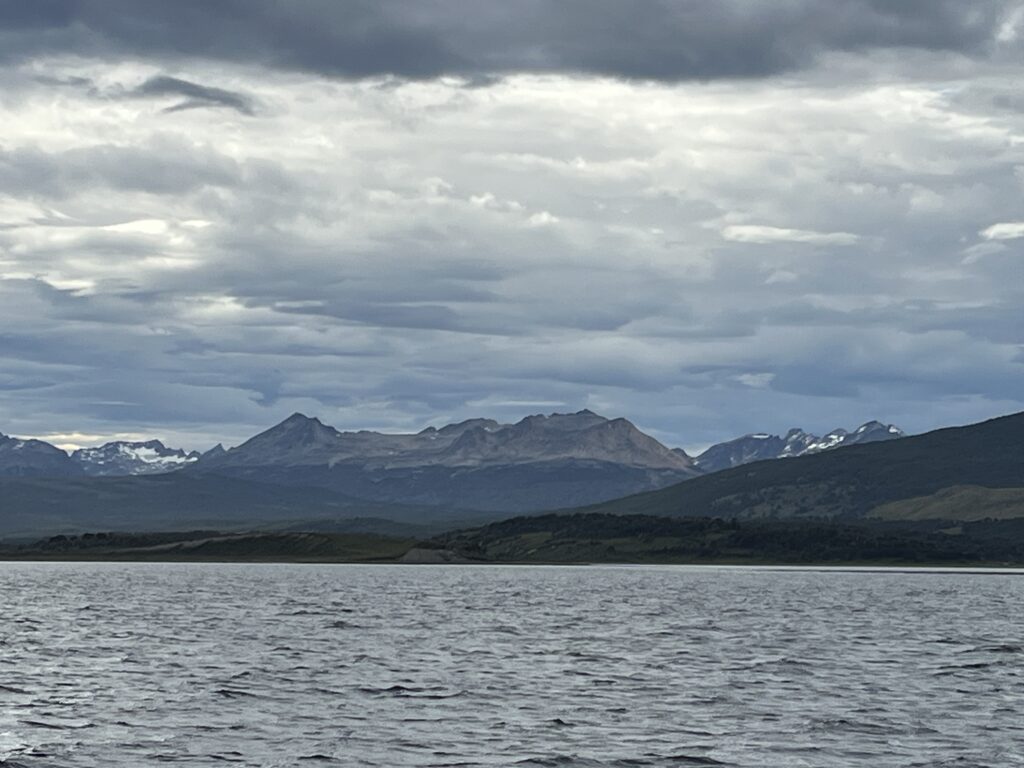
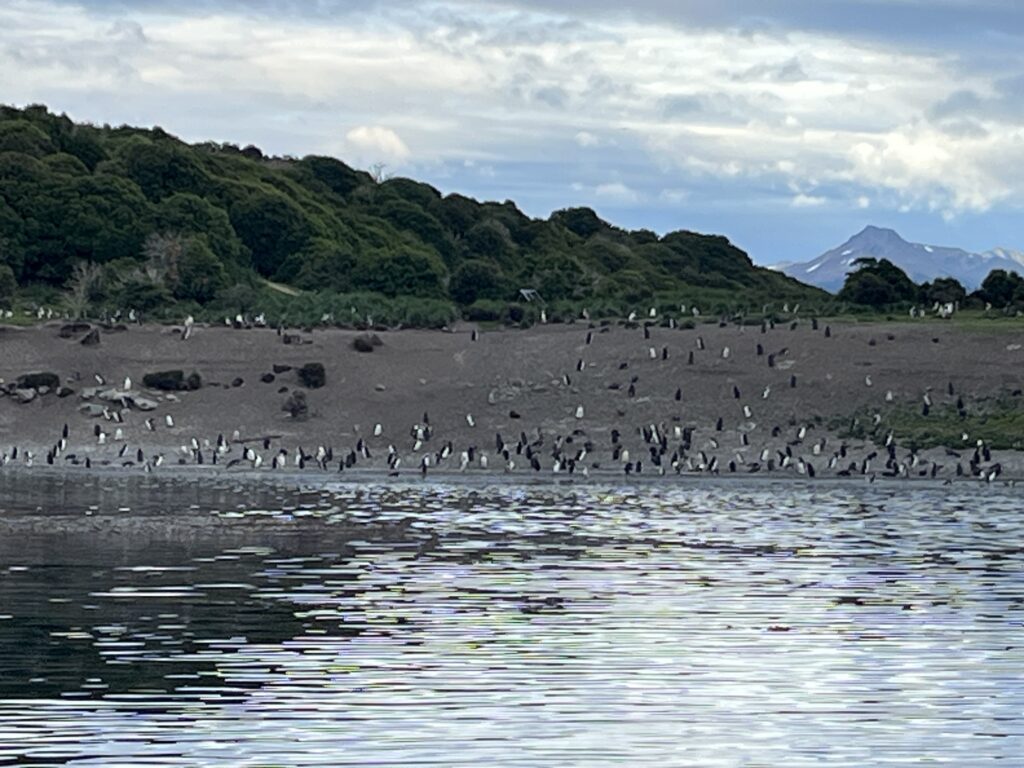
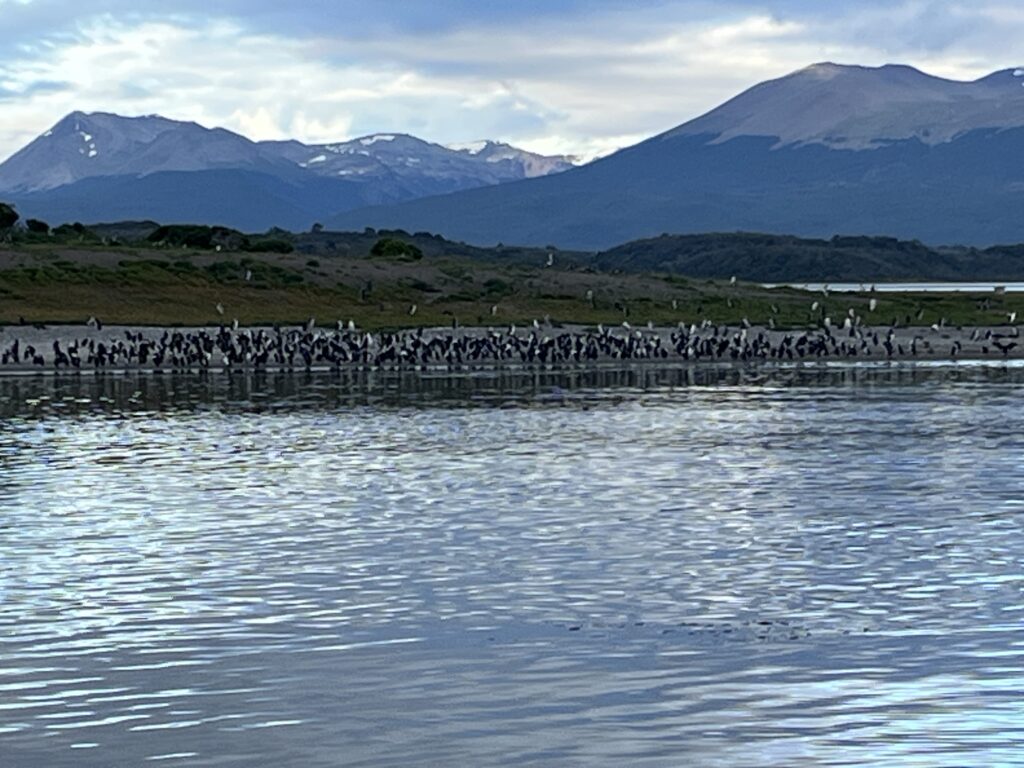
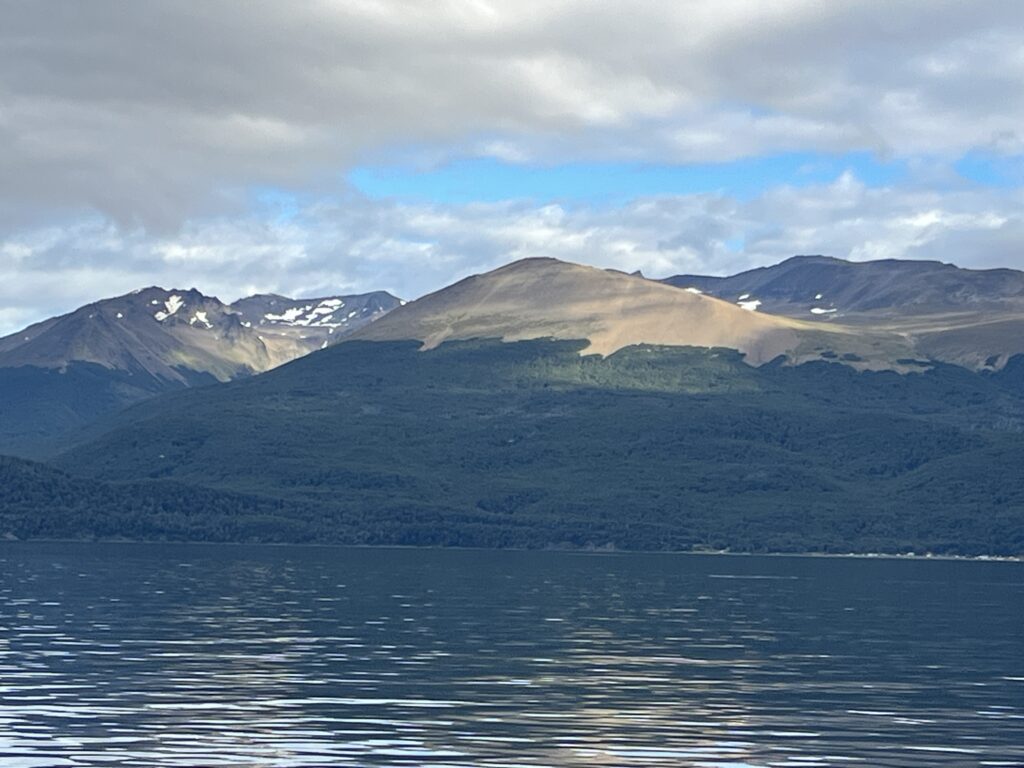
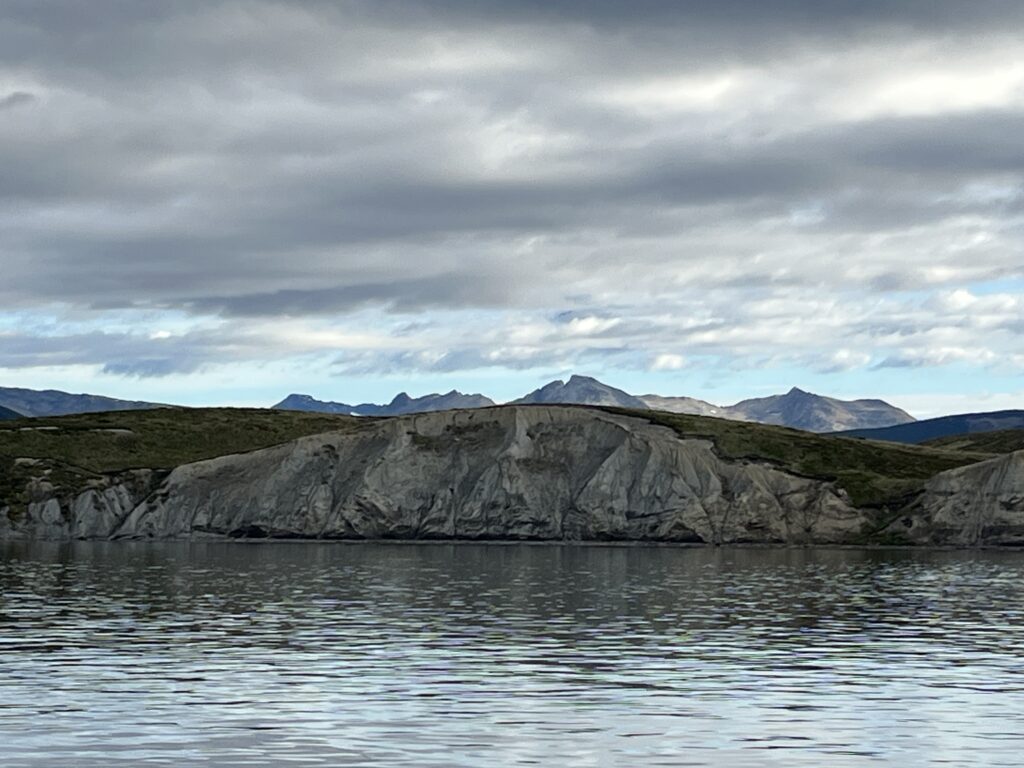
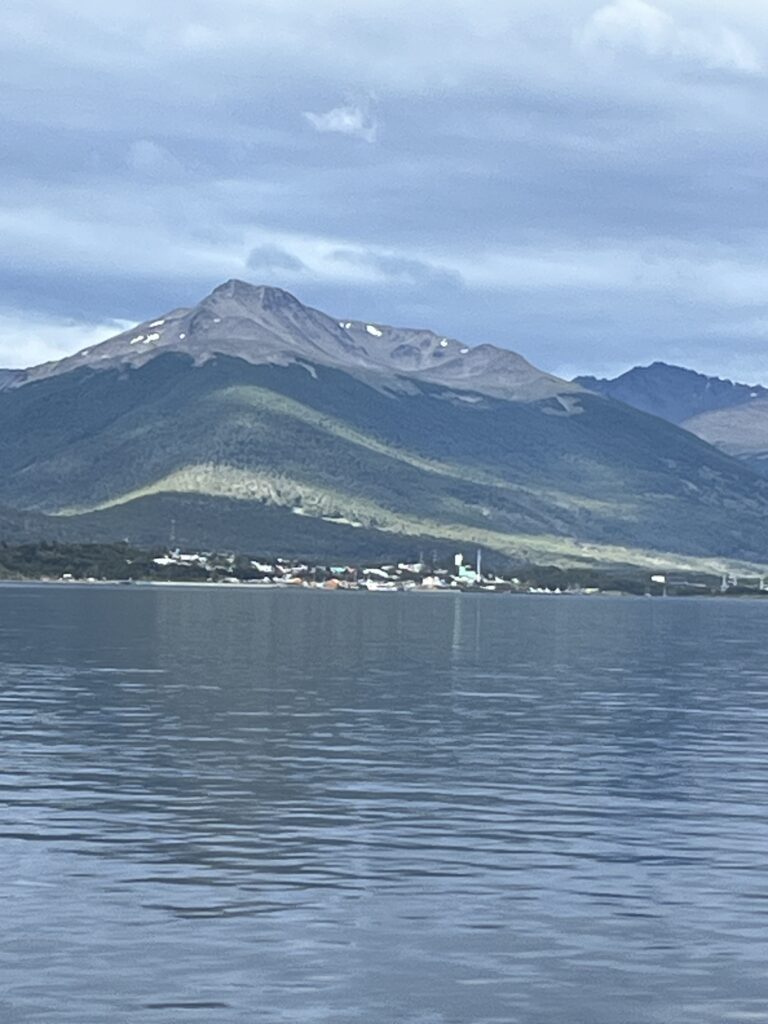
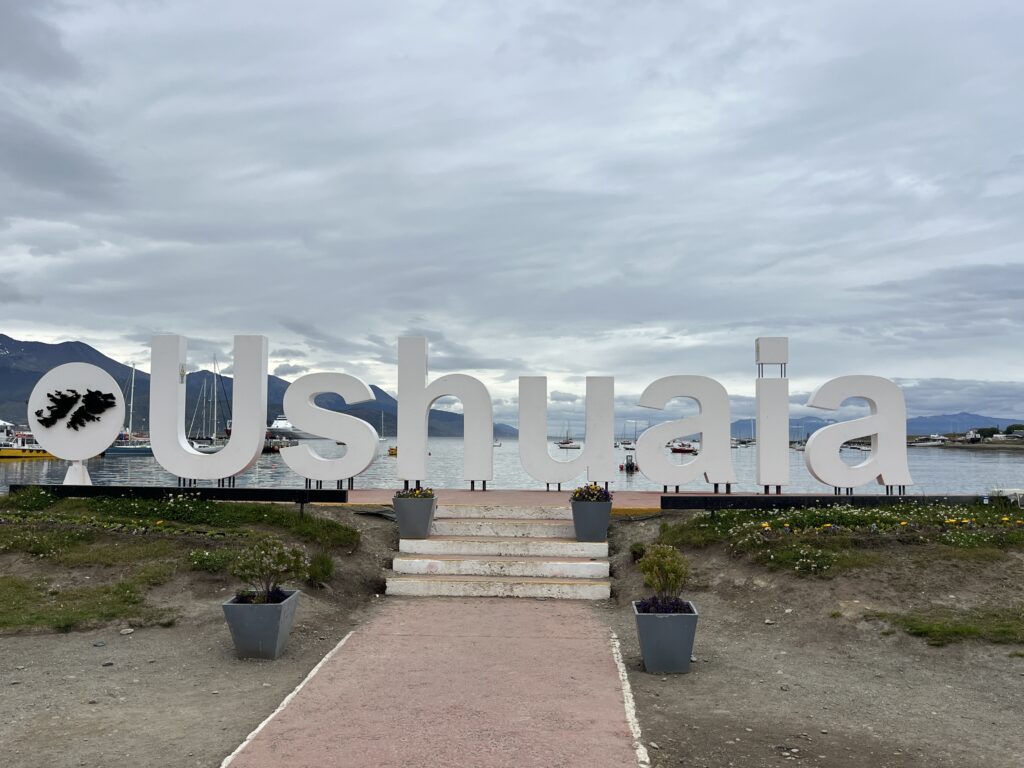
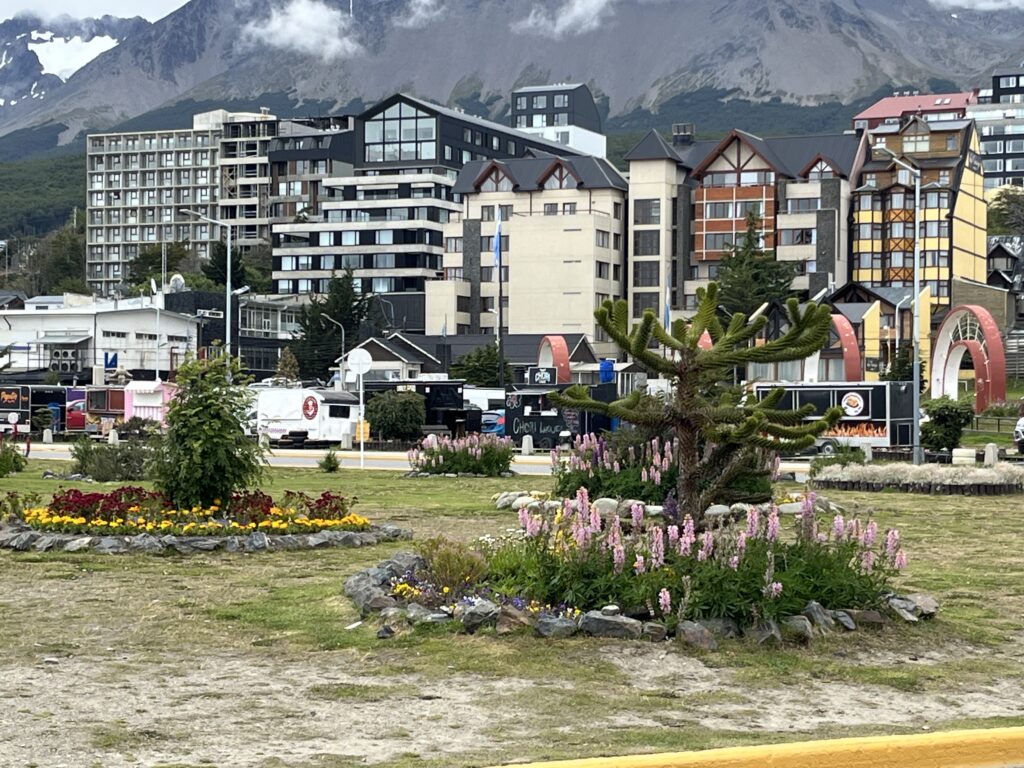
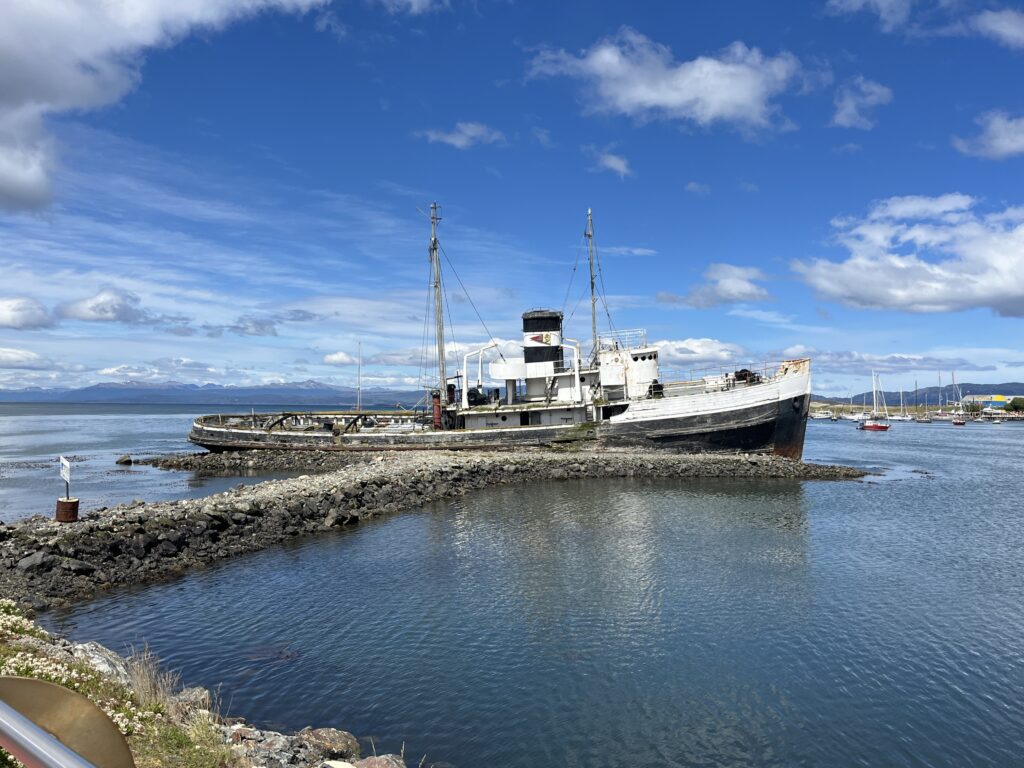
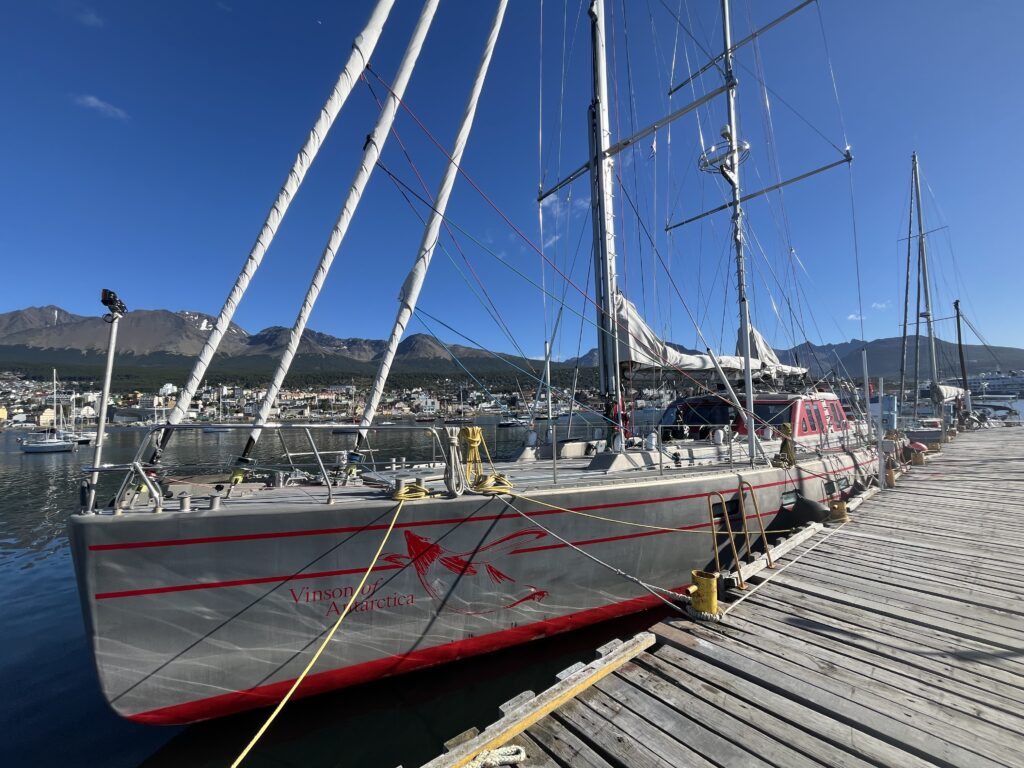
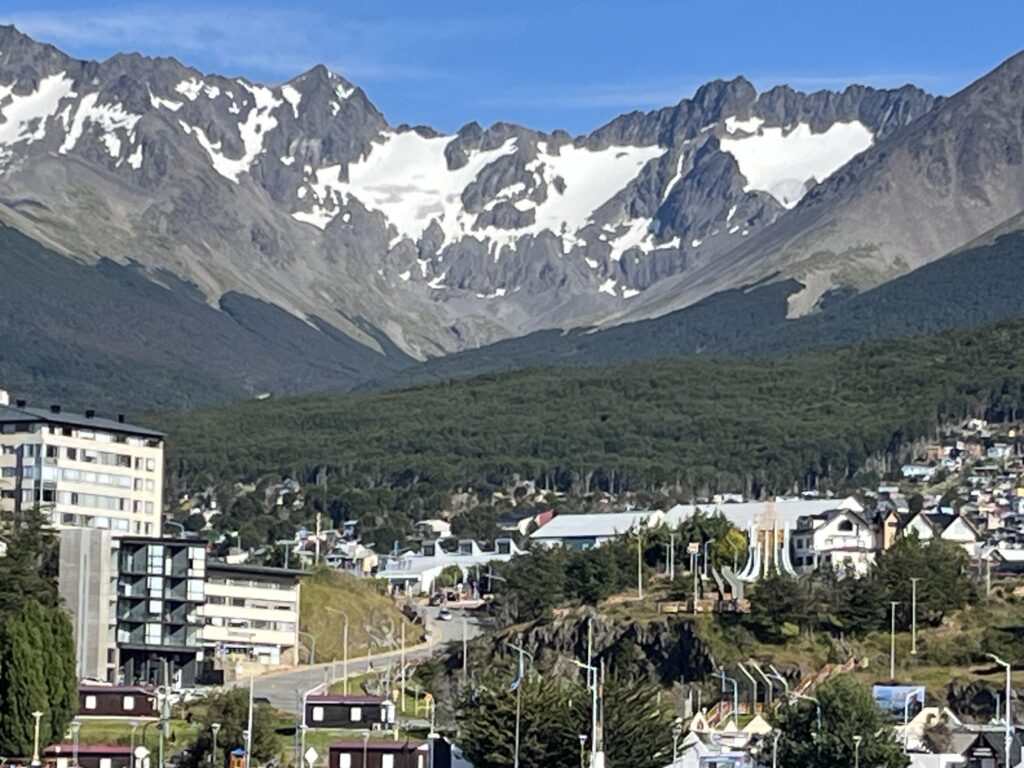
Nun beginnt für uns ein etwas herausfordernder Teil der Strecke in den Beagle Canal, die Le Maire Strasse. Hier muss man genau auf Wind und Tidenströmungen achten, da man es sonst u.U. nicht durch und unten um die Ecke in den Beagle Canal schafft. Wir haben es genau recherchiert und berechnet, so dass wir sicher sind, es gut zu schaffen bis zu unserer nächsten Bucht, der Puerto Espanol. Trödeln dürfen wir allerdings nicht, so dass wir meistens Motorsegeln um die nötige Geschwindigkeit und den Strom mit uns zu haben. Ganz geht die Rechnung wie immer nicht auf und wir werden trotzdem immer wieder gebremst, aber am Ende geht es sich aus. Es geht vorbei an der Isla Grande de la Tierra del Fuego und plötzlich sehe ich es – Walblas. Ich kann es nicht glauben. Eine Gruppe Orcas hat sich hier versammelt zur Jagd auf Robben und Pinguine. Für Segelboote interessieren sie sich gar nicht, Gott sei Dank. Wir können Buckel und Finnen sehen, aber leider zu weit entfernt um es auf Photos festzuhalten. Ich bin glücklich, wollte ich doch schon immer Wale sehen. Auch Pinguine schwimmen immer wieder mal am Boot vorbei. Es ist einfach fantastisch. So erreichen wir voll mit neuen Eindrücken um kurz nach 7 abends und 63sm Puerto Espanol und werfen unseren Anker. Nach 2 Tagen geht es weiter 56sm nach Bahia Harberton. Hier gibt es schon wieder so etwas wie Zivilisation und die Bucht ist gut geschützt. Allmählich wird uns die Zeit jetzt lang und wir freuen uns auf Ushuaia und die erste heiße Dusche seit 3 Wochen 😉. Immerhin sind wir inzwischen seit 16 Tage unterwegs ohne Landgang. Nach einer kurzen Nacht in Harberton brechen wir am nächsten Morgen früh auf zu unserer letzten Etappe im Beagle Canal. Auf dem Weg stoppen wir noch einmal kurz an der Isla Martillo, der Pinguin Insel und statten den Magellan Pinguinen einen Besuch ab. Und dann geht es endlich direkt nach Ushuaia, der südlichsten Stadt der Welt. Um 12:30, nach 37sm legen wir dort am Dock an und werden mit einem „warm Welcome“ von Raxanna in Empfang genommen. Als erstes österreichisches Boot seit Jahren und erstes TransOcean Boot dieses Jahr, sind wir glücklich und stolz, dass wir es geschafft haben, was für eine Ehre 😀. Für heute steht nur noch die Bürokratie und ein erster Spaziergang in der Stadt an. Was sofort auffällt, ist die Anzahl an Kreuzfahrt Schiffen und kommerziellen Segelschiffen, die Gäste in die Antarktis karren. Entsprechend ist der Ort sehr touristisch und teuer. Die Landschaft ist trotzdem atemberaubend und wir werden nach unserer üblichen Bootsarbeit die restliche Zeit sicherlich Nutzen um die Umgebung auszukundschaften. Später legt dann direkt hinter uns noch eines der zwei Schiffe von Skip Nowak hinter uns an. Wahnsinn, wen man hier so alles trifft 😀.
So now it’s time, we’re really doing it and going to Patagonia. If someone had told me that a year ago, I wouldn’t have been able to imagine it. Back then, even with winds of 20 knots (approx. 37 km/h), I panicked that the ship would sink and we would all die for sure. But as the saying goes, you grow with your tasks, and today 20 knots only elicit a yawn from me and the question of where the wind is now. It’s fascinating how perspectives change and boundaries shift. And our boundaries have definitely been redefined in this sailing area.
So we leave Mar del Plata and enjoy a few hours of great sailing – if only it could continue like this (we know that’s wishful thinking 😉). It doesn’t take long before we have a rapidly dripping stuffing box (a stuffing box seals the rotating propeller shaft as it passes through the hull to prevent water ingress). This is definitely a place where you don’t want water to get into the boat. So we lower the sails and stop the boat so that the shaft stops turning, and Franz tries to solve the problem using the straw method. We can’t completely stop the dripping, but we can slow it down considerably. We therefore decide to continue sailing and not return to Uruguay to have the problem fixed on land. It’s important to note that as we continue on our journey, opportunities for repairs on land become increasingly rare, not to mention the purchase of spare parts. And, of course, we are once again facing strong headwinds, which is why we have chosen Bahia Janssen as our first stop to wait out the storm. On the way there, we have a rough time of it, sailing close to the wind all night with strong winds of over 30-40 knots. It’s not exactly comfortable. I can usually sleep anywhere and in any position, but even I couldn’t find a position where I didn’t slide across the bed. So we are very happy when we reach Bahia Janssen after 650 nautical miles and drop anchor. The bay is not super sheltered and the boat is rolling considerably, but the anchorage is good and the anchor holds fast. There are penguins here too, and I had no idea how smelly these animals can be. We are about 800m from the shore and can smell it very clearly 😖. The next day after noon, we continue south. The landscape is changing noticeably. Less infrastructure, more nature. It’s getting colder outside and we are once again grateful for our solid wheelhouse, where we can sit warm and dry. We are also using our diesel heater and engine heater more and more often.
As the current weather conditions mean that we won’t be able to sail all the way to Ushuaia, we decide to make Bahia Thetis our next stop. On our way there, we have to deal with constant changes in the wind and therefore different sail positions in order to maintain our speed. Every now and then, we also encounter currents that slow us down. It’s not that easy here. But the rare Commerson’s dolphins that accompany us make up for it, as always. So we continue, sometimes with sails and engine, sometimes with just engine or sails, depending on the wind. Fortunately, there are no big waves, always between 1-2 meters, and the weather is reasonably good until suddenly a black wall builds up to the side of us. Luckily, our sails are already reefed (reduced in size), as we wouldn’t have had time to do so given how quickly this storm cell is reaching us. With gusts of up to 45 knots (83 km/h), it feels like the end of the world for a moment. We are sailing on reaching (wind 90 degrees from the side) and the boat is heeling (leaning to one side) at 25-28 degrees. It’s a little scary, but also totally impressive how our Amber shoots through it on autopilot. I wouldn’t have wanted to steer it by hand 😵💫. As quickly as it came, the storm passes and the nightmare is over. We cover the rest of the way in peace and at 6:40 this morning, after 640 nautical miles, we drop anchor in Bahia Thetis. This bay is also very beautiful and surrounded by pure nature. As the weather and wind forecast is not really ideal, we decide not to stay here too long but to set off again very early the next day. When the alarm clock rings at 4:00 a.m, we can’t bring ourselves to get up. Obviously, the distance we’ve covered is taking its toll. We turn over and postpone our departure by one day. The conditions don’t improve, but hindsight is always 20/20. We use the extra day to rest, cook in advance, and bake bread. So, on January 19, we weigh anchor and immediately encounter the first difficulty. Here in this area, there are so-called kelp fields. Kelp is a tough type of brown algae that grows like a forest on the seabed and can reach a height of up to 60 meters.
You should avoid sailing into them or dropping anchor there, as the kelp can get caught in the propeller or anchor and then has to be cut out. This usually means that someone from the crew has to go into the water. The temperatures here are definitely not inviting 🥶. So when our anchor breaks free, the boat suddenly can’t be steered to the right anymore. Something is blocking it, but we are lucky. Whatever it is, it can be loosened with a few energetic strokes of the oars. The rudder is still sluggish to the right, but we can turn the boat around and leave the bay without sailing into a kelp field 😅. Once outside, we stop and get to the bottom of the problem. The steering cable on the right has come loose. This isn’t new, we’ve had it before and it can be fixed. The strain of the wind and waves over the past few days is also taking its toll on the equipment.
Now we begin the somewhat challenging part of the route into the Beagle Canal, the Le Maire Strait. Here, you have to pay close attention to the wind and tidal currents, otherwise you may not make it through and around the corner into the Beagle Canal. We have researched and calculated everything carefully, so we are confident that we will make it safely to our next bay, Puerto Espanol. However, we can’t dawdle, so we mostly motor-sail to maintain the necessary speed and keep the current with us. As always, our calculations don’t quite add up and we are slowed down again and again, but in the end it all works out. We pass Isla Grande de la Tierra del Fuego and suddenly I see it – whale spouts. I can’t believe it. A group of orcas has gathered here to hunt seals and penguins. Thankfully, they are not interested in sailboats. We can see humps and fins, but unfortunately they are too far away to capture on camera. I’m happy, as I’ve always wanted to see whales. Penguins also swim past the boat from time to time. It’s just fantastic. Full of new impressions, we reach Puerto Espanol shortly after 7 p.m. and drop anchor. After two days, we continue 56 nautical miles to Bahia Harberton. Here, there is something resembling civilization again, and the bay is well protected. Gradually, time is dragging for us now and we are looking forward to Ushuaia and our first hot shower in three weeks 😉. After all, we have now been underway for 16 days without going ashore. After a short night in Harberton, we set off early the next morning for our last leg in the Beagle Canal. On the way, we stop briefly at Isla Martillo, the penguin island, to visit the Magellanic penguins. And then we finally head straight to Ushuaia, the southernmost city in the world. At 12:30 p.m., after 37 nautical miles, we dock there and are greeted with a warm welcome from Roxanna. As the first Austrian boat in years and the first TransOcean boat this year, we are happy and proud that we made it – what an honor 😀. For today, all that’s left to do is deal with the bureaucracy and take our first walk in the city. What immediately strikes us is the number of cruise ships and commercial sailing ships that transport guests to Antarctica. Accordingly, the place is very touristy and expensive. Nevertheless, the landscape is breathtaking, and after our usual boat work, we will certainly use the rest of our time to explore the area. Later, one of Skip Nowak’s two ships docks right behind us. It’s amazing who you meet here 😀.