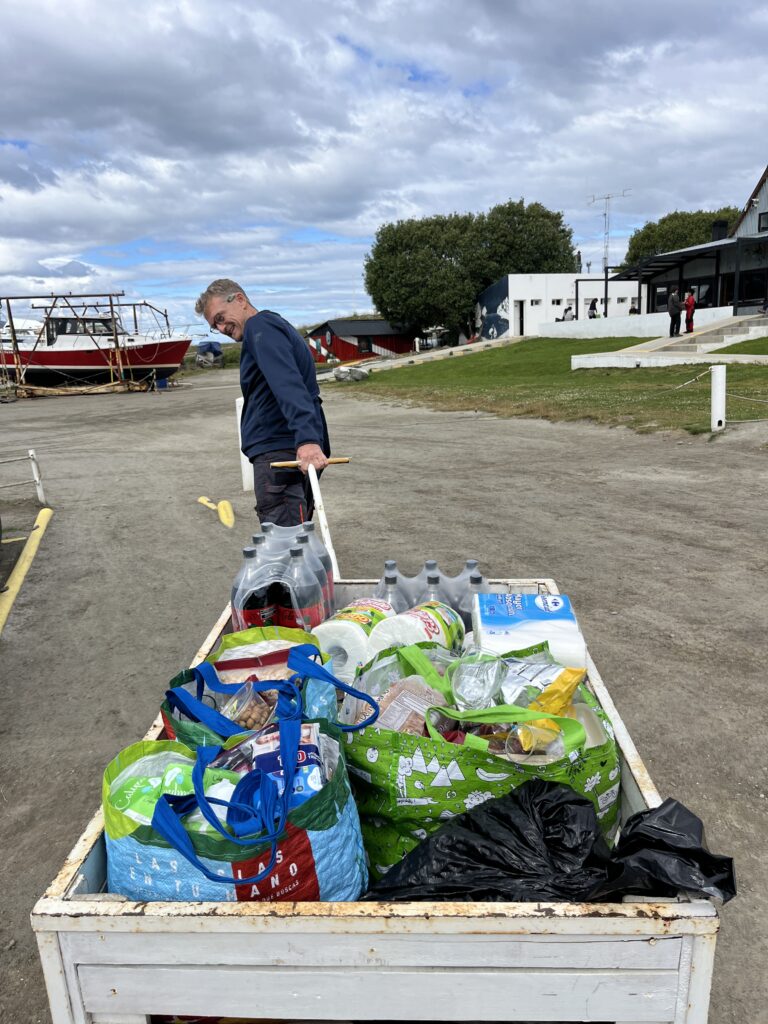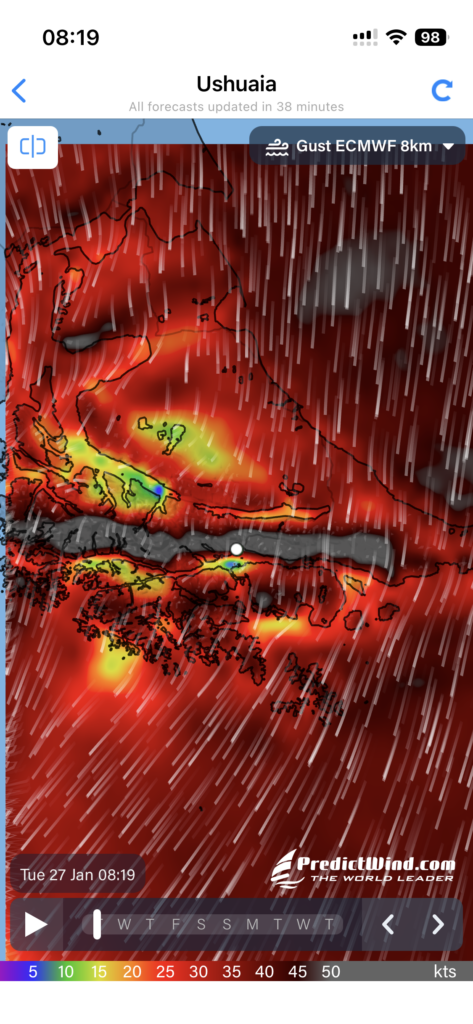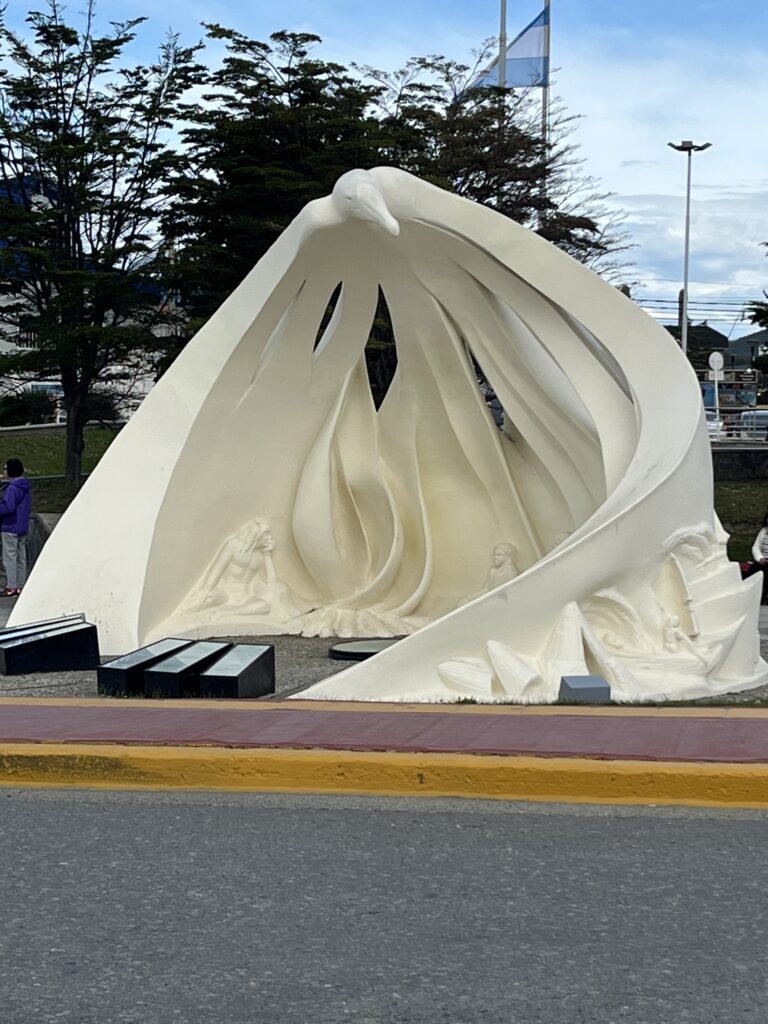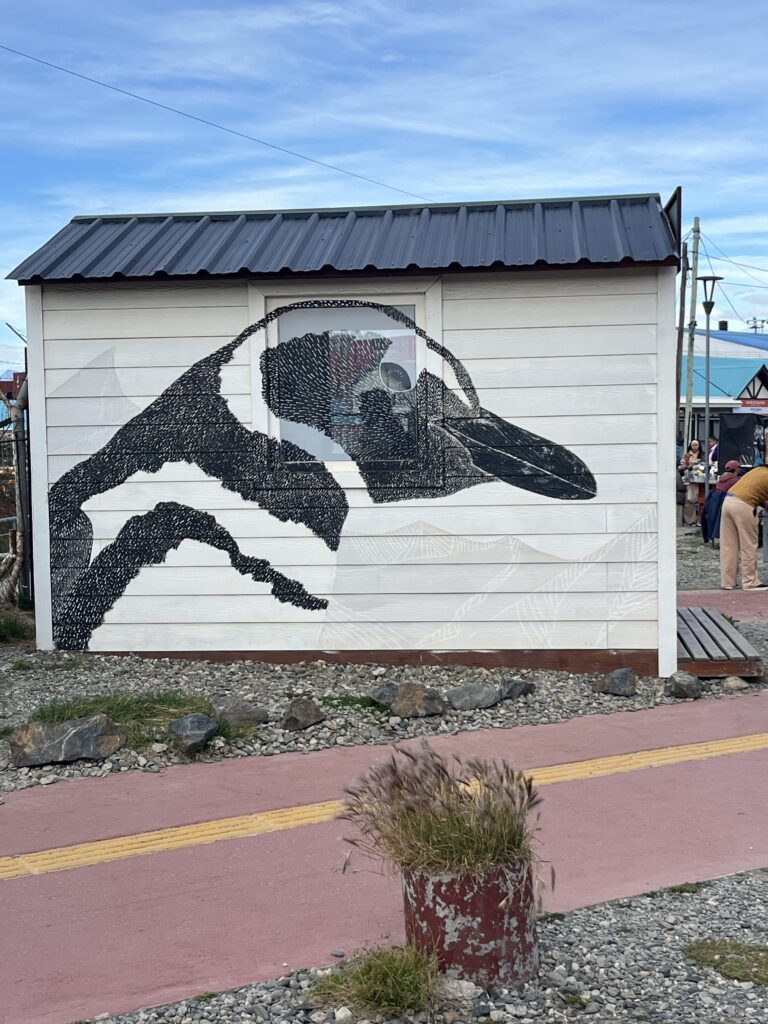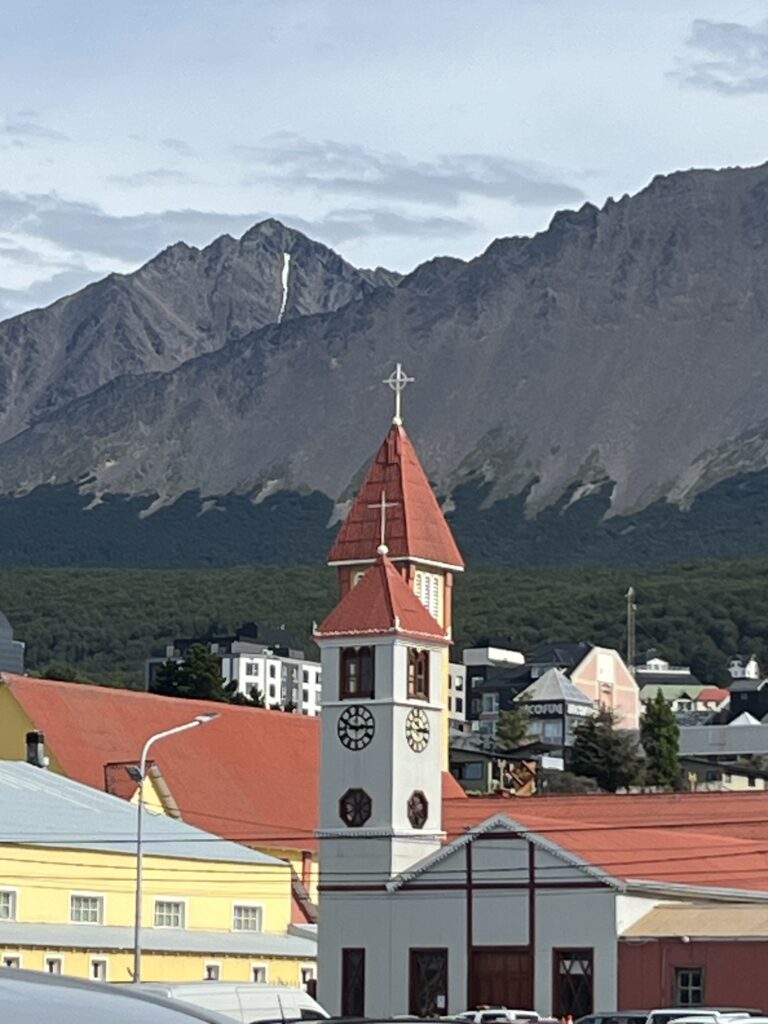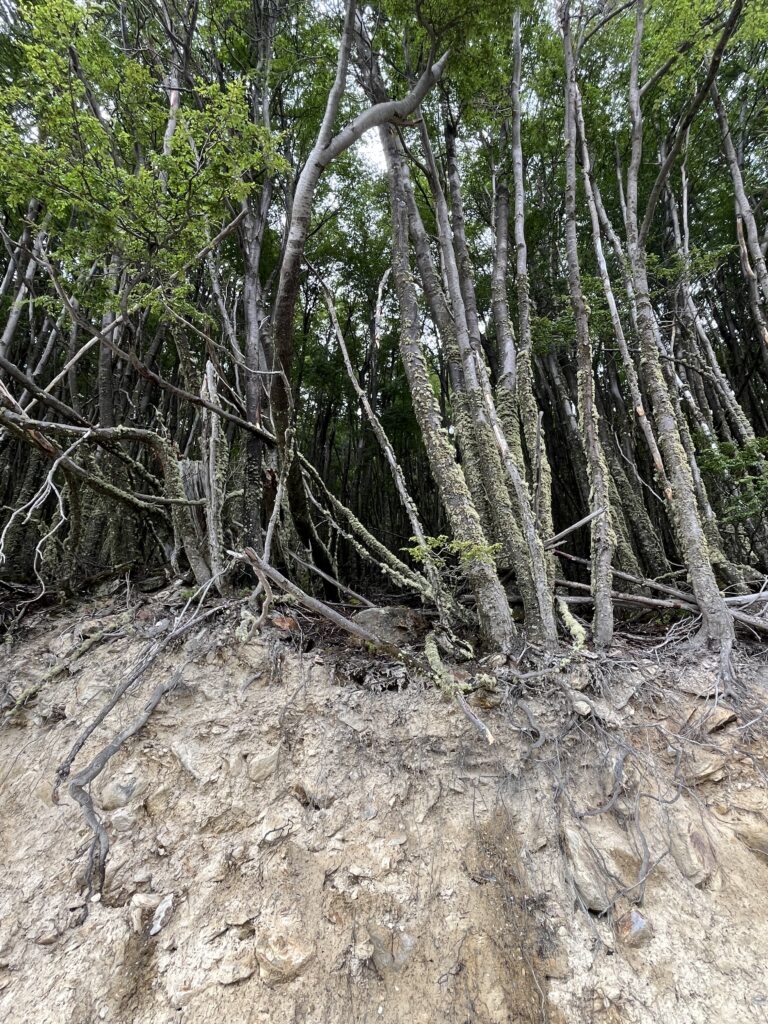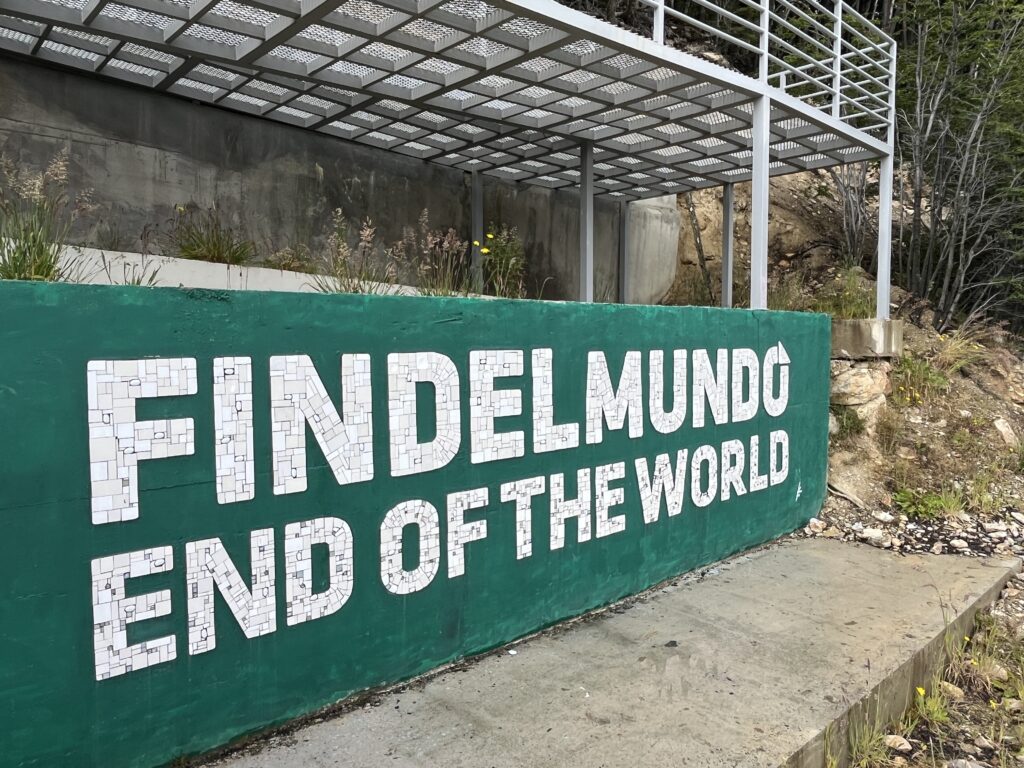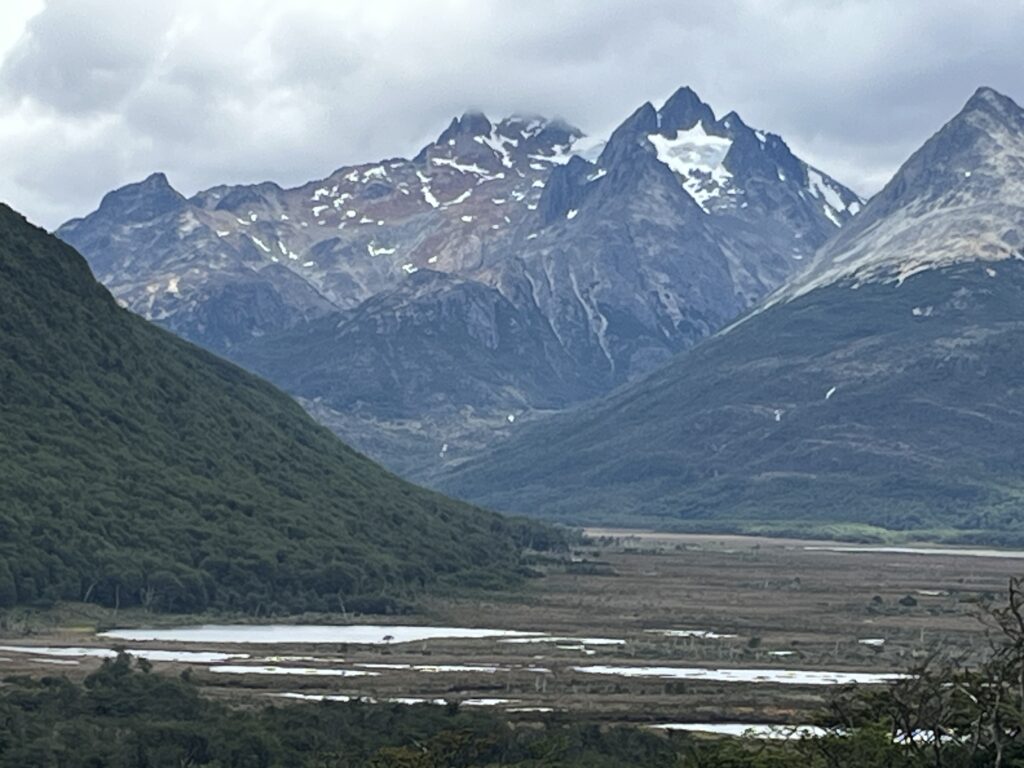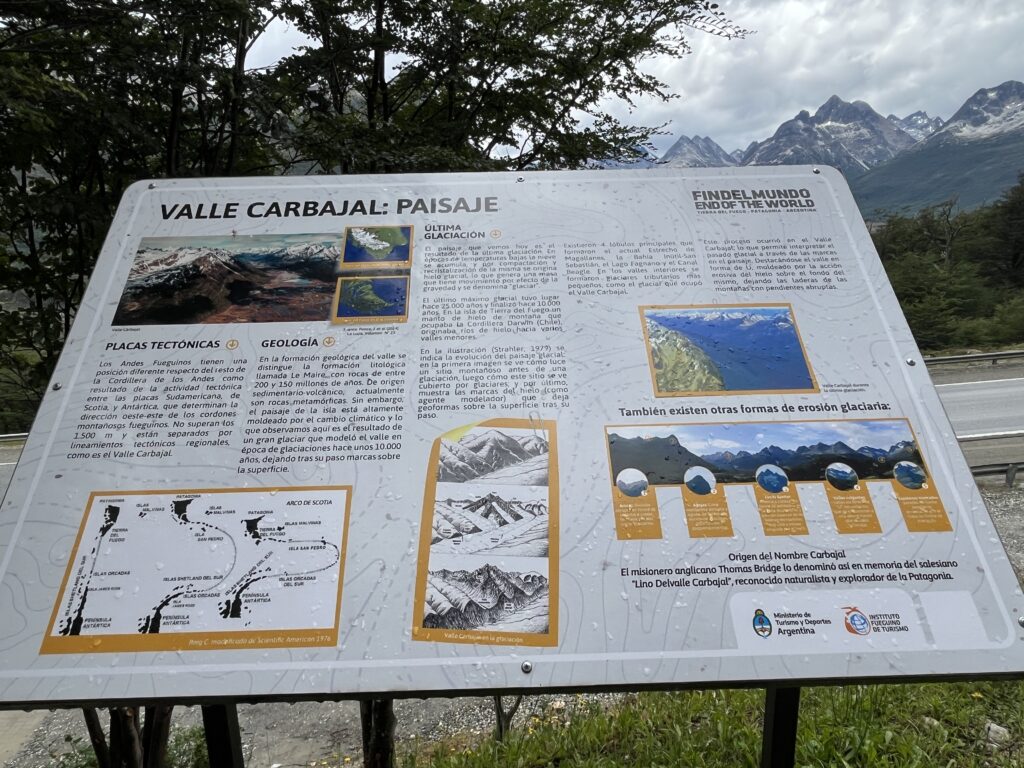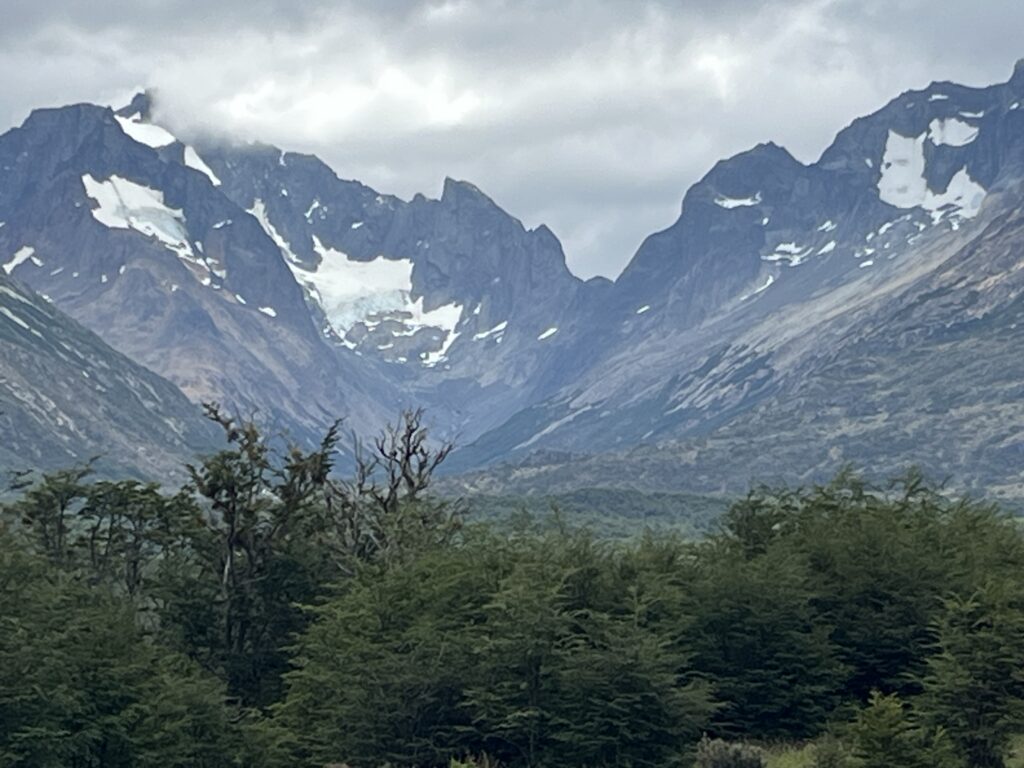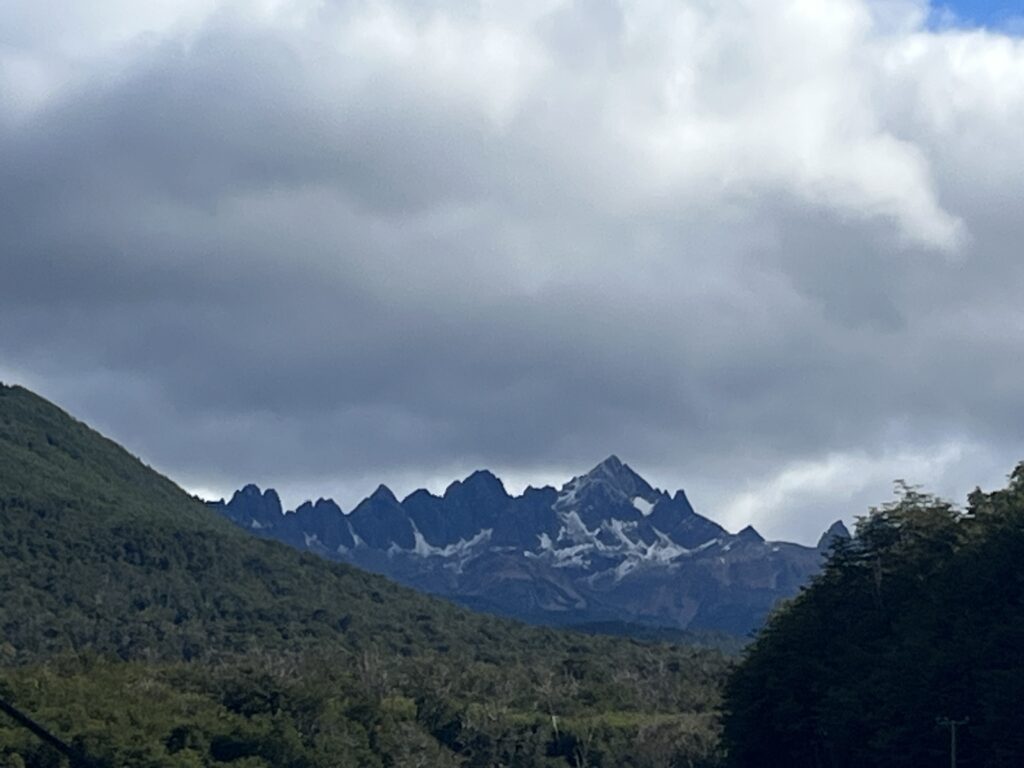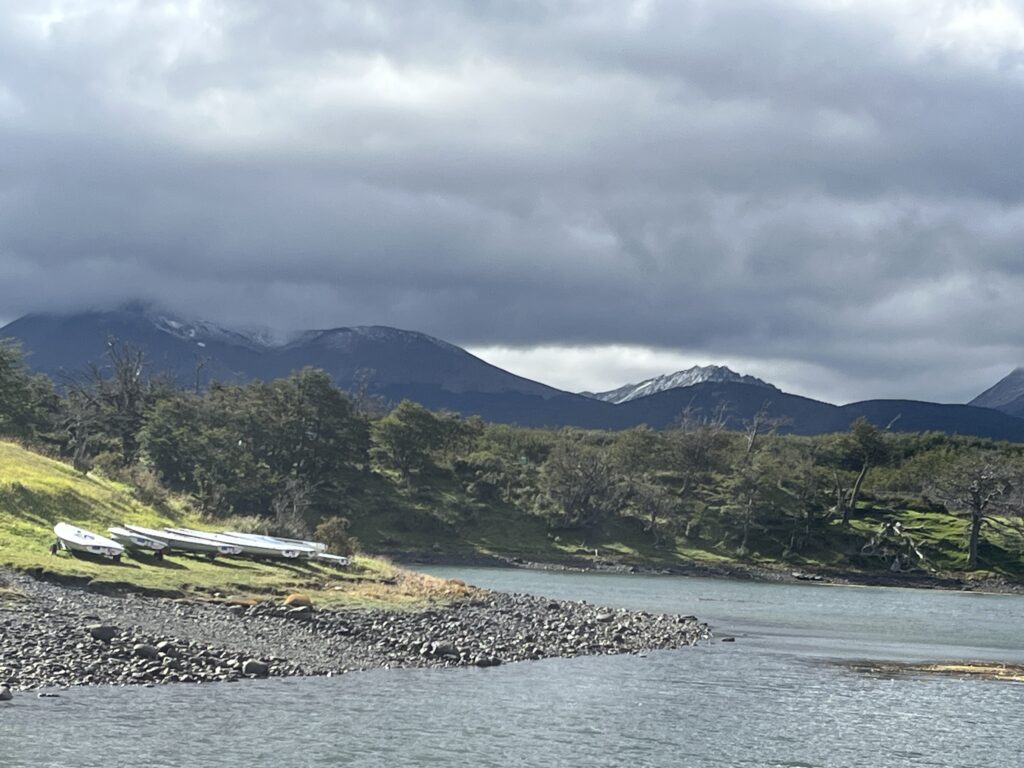
Die ersten Tage in Ushuaia vergehen wie im Flug mit Bürokratie und den üblichen Bootsarbeiten. Die Stadt selbst ist nicht besonders eindrucksvoll, wie bereits erwähnt, sehr touristisch und teuer. Dafür ist die Landschaft darum herum umso eindrucksvoller. Gerne hätten wir während unserer Zeit hier ein paar Wanderungen gemacht, aber leider kommt immer irgendetwas dazwischen. Ebenfalls beeindruckend ist die Zahl der Kreuzfahrtschiffe, die hier täglich an und ablegen. An einem Tag haben wir 8 Stück gezählt, die zur gleichen Zeit im Hafen und in der Bucht liegen
Dafür finden wir schnell Anschluß an unsere Bootsnachbarn und stellen fest, dass wir inzwischen das kleinste Boot an diesem Steg sind. Umringt von 60-70 Fuß Booten, wirkt Amber richtig zierlich. Daher dürfen wir unseren Platz auch exklusiv alleine behalten und werden nicht ins Paket gelegt. Stört mich gar nicht. Die meisten anderen Crews fahren gewerblich Kunden in die Antarktis und nach Südgeorgien. Private Boote mit zweier Crew sind eher selten. Ausserdem wird man täglich mehrfach angesprochen, ob man Leute mitnimmt. Einmal haben wir tatsächlich kurz überlegt, uns dann aber dagegen entschieden. Es gibt einige Auflagen zu erfüllen und final trägt der Skipper die Verantwortung, sollten sich die Mitfahrer nicht an die Regeln halten. Außerdem fahren wir gar nicht in die Antarktis. Interessiert hätte es uns schon, aber da man ein Permit braucht, dessen Ausstellung c.a. 6 Monate dauert, geht sich das für uns zeitlich nicht aus.
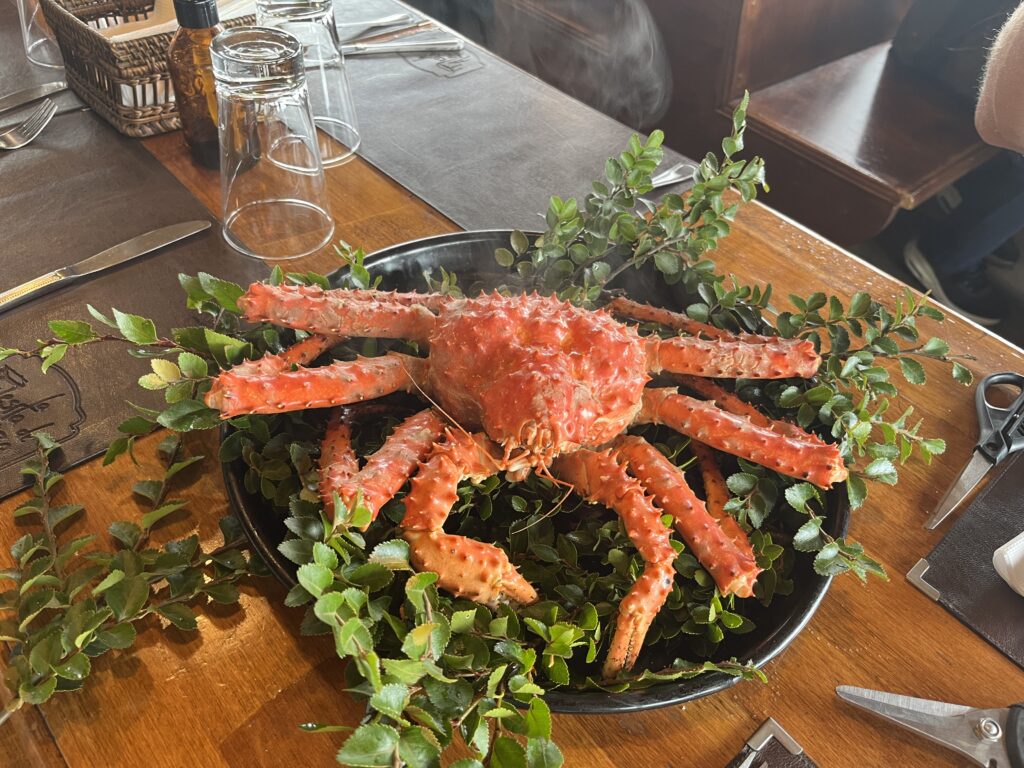
Nach ein paar Tagen, nehmen wir uns dann doch einen Leihwagen und beschließen wenigstens einen Ausflug nach Puerto Almanza zu machen. Schon die Strecke dorthin ist landschaftlich traumhaft. Puerto Almanza selbst ist klein und besteht zu 80% aus Restaurants. Der Rest sind Wohnhäuser und kleine Läden. Im bekanntesten Restaurant vor Ort, kehren wir ein um eine lokale Spezialität zu probieren – King Crab. Die gekochte Krabbe wird schön angerichtet mit allerlei Werkzeug serviert und wir bekommen eine kurze Einführung, wie man das Tier am besten isst. Der Geschmack ähnelt ein bisschen dem von Hummer, ist aber etwas süßlicher. Und es ist eine Menge Arbeit für wenig Ergebnis. Man kann nur die Beine und die Scheren Essen. Um an das schmackhafte Fleisch zu kommen, muss man den Panzer knacken oder mit einer Schere aufschneiden. Dieser ist noch dazu mit richtig spitzen kleinen Stacheln übersäht. Anfangs denken wir noch eine Krabbe ist vielleicht zu wenig (allerdings kostet das Tierchen schlappe 100€), und am Ende ist es mehr als genug für uns beide. Man kann gar nicht so viel davon Essen, ist wie mit Leberkäse, von einem auf den anderen Bissen steht es einem an. Eine Erfahrung ist es trotzdem. Anschließend gehen wir noch eine Runde am Wasser entlang spazieren. Es ist wirklich das Ende der Welt. Raue Landschaft und ebensolches Wetter. Wind, Sonne und Regen wechseln sich gefühlt minütlich ab.
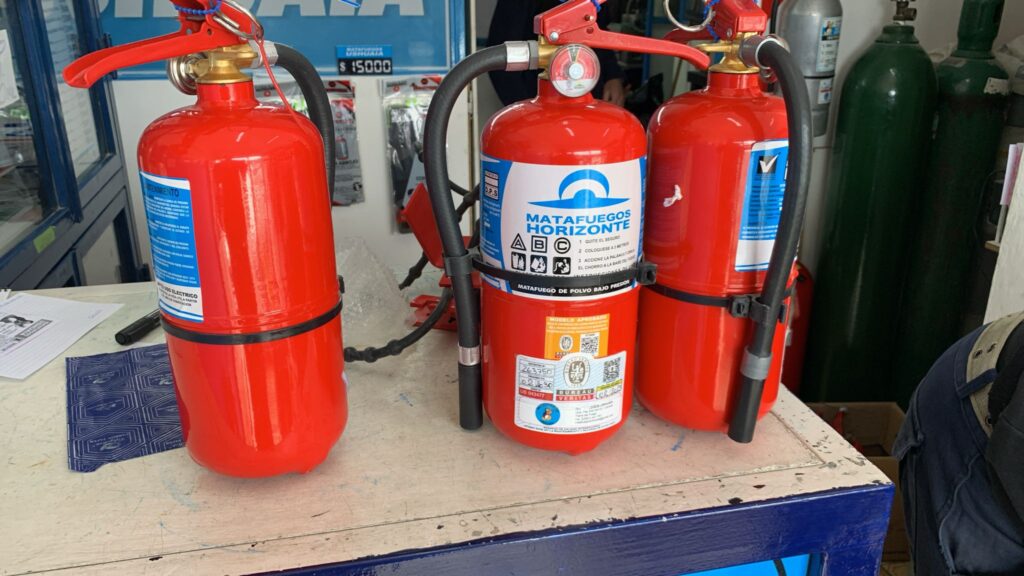
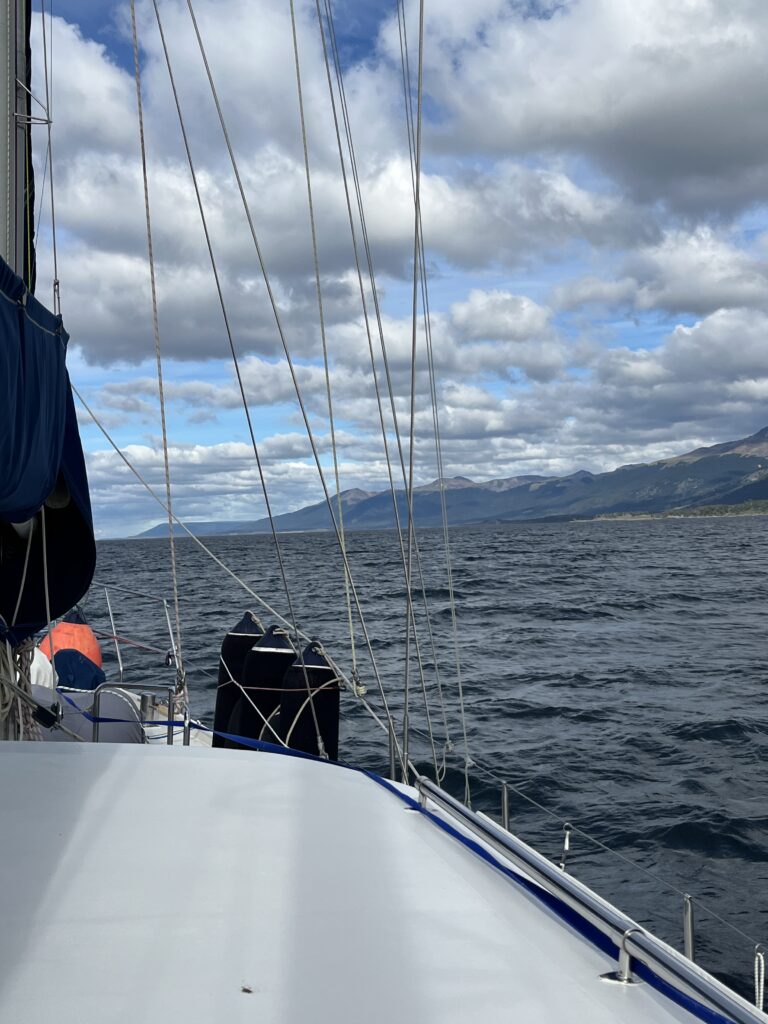
Inzwischen sind wir eine gute Woche hier und die altbekannte Unruhe setzt langsam ein. Wir wollen weiterziehen. Also bereiten wir am Sonntag alles vor und absolvieren am Montag die nötige Bürokratie. Bei unserem letzten Stop, der Präfektura, wird uns mitgeteilt, dass wir vor Abfahrt auch noch eine Inspektion bekommen. Wir persönlich halten das zwar für völlig überflüssig, sitzen da aber natürlich am kürzeren Hebel. Also marschieren wir zurück zum Boot und warten auf die Herren Inspektoren. Nach zwei Stunden warten wir immer noch. Eigentlich wollen wir losfahren und Franz fragt mal über Funk ob da jetzt einer kommt oder nicht. „Ja ja, in 5 Minuten“. Also gut noch 5 Minuten. Sie kommen tatsächlich und arbeiten umständlich ihre Checkliste ab. Bis zu den Feuerlöschern geht alles gut. Aber dann teilt man uns mit, diese müssen jährlich gewartet werden, nicht laut Siegel auf dem Feuerlöscher selbst (nicht das dies irgendwo gestanden hätte) und die Wartung belegt werden. Damit sind wir durch die Inspektion gefallen und müssen neue Feuerlöscher besorgen. Ironischerweise hat der Inspektor auch gleich das passende Geschäft vor Ort samt Öffnungszeiten parat. Das ist doch ein abgekatertes Spiel und eine Vetternwirtschaft. Wir sind angefressen, weil wir heute hier nicht weg dürfen und uns um die Feuerlöscher kümmern müssen. Ausserdem müssen wir das ganze Ausklarierungsprozedere morgen wiederholen. Noch dazu macht Roxanna Stress, weil sie unseren Platz für ein grösseres Boot braucht. Entsprechend angespannt ist die Stimmung am Abfahrtstag, wovon wir uns allerdings nicht aus der Ruhe bringen lassen und ganz entspannt unsere Vorbereitungen zu Ende bringen. Gegen halb zwei legen wir endlich ab und das Marina Büro besitzt doch glatt die Frechheit, einen weiteren Tagessatz verrechnen zu wollen, da wir erst nach 13:00 abgelegt haben. Sie kann uns mal im Mondschein begegnen, wir zahlen nichts mehr. Gemütlich geht es unter Motor durch den Beagle Kanal die 25sm Richtung Puerto Williams. Nach der Hälfte der Strecke kreuzen wir die Grenze zwischen Argentinien und Chile, die an dieser Stelle in der Mitte des Kanals verläuft und ich setze die Chilenische Flagge. Dies ist nun schon das 10. Land auf unserer Reise.
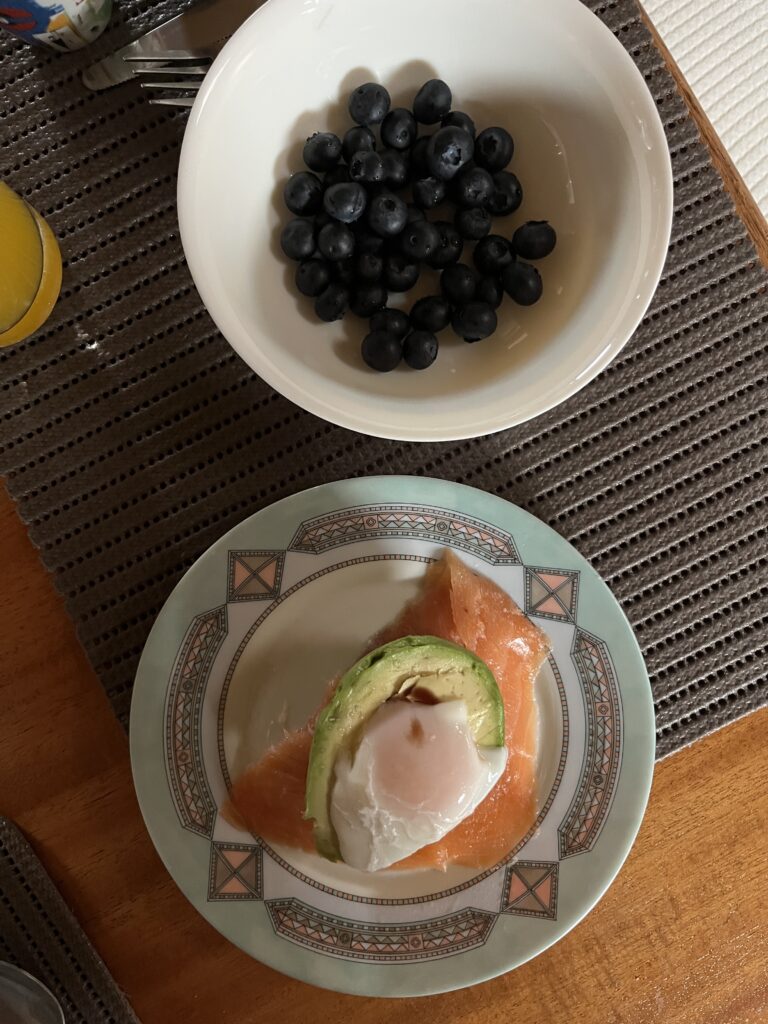
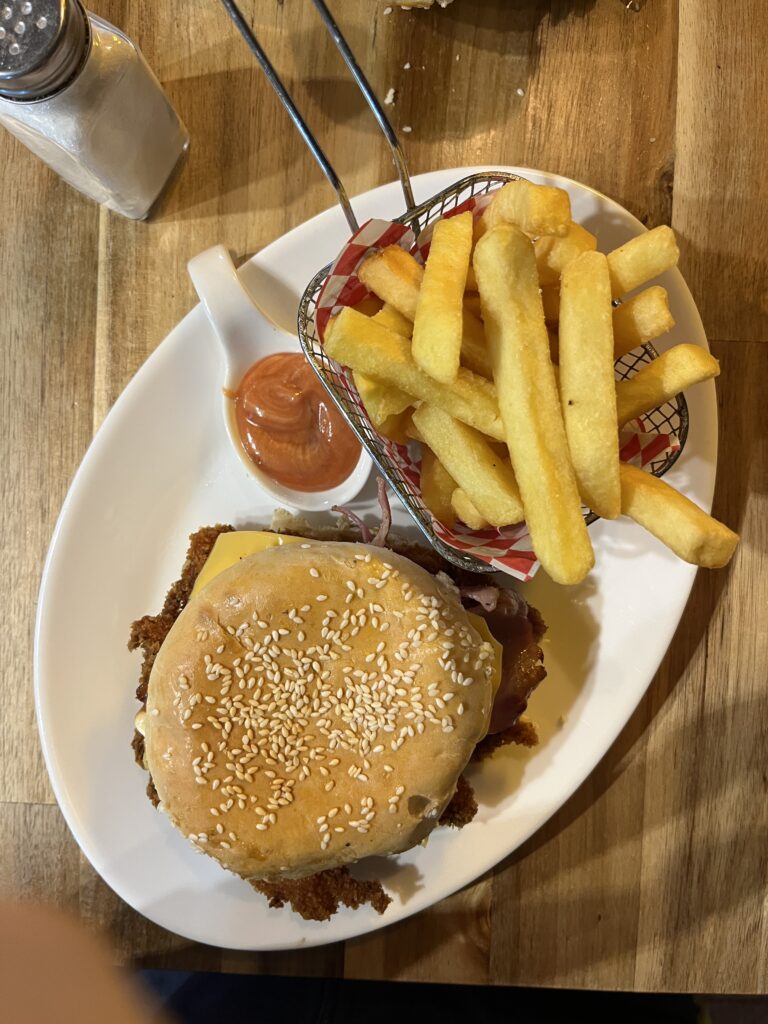
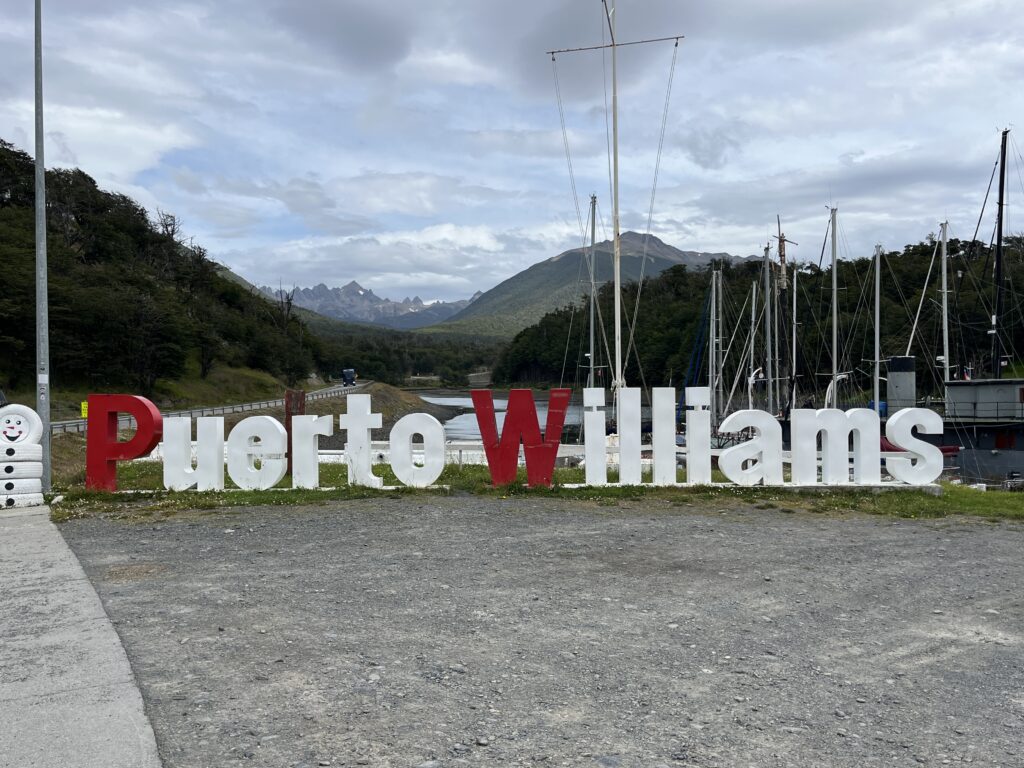
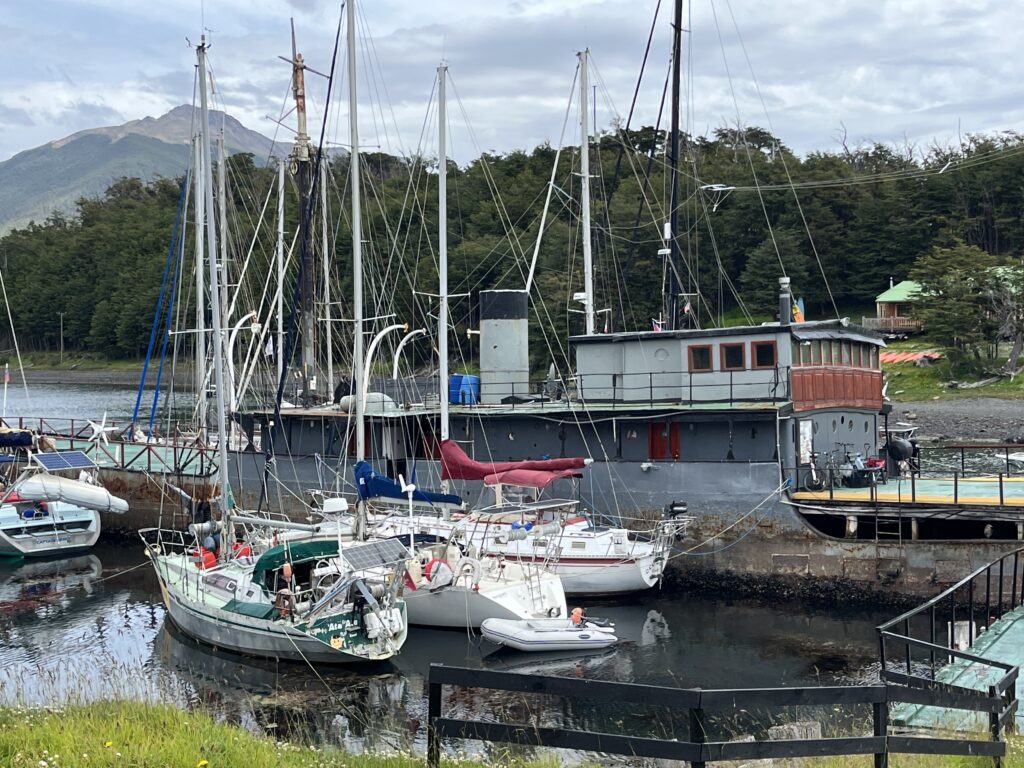
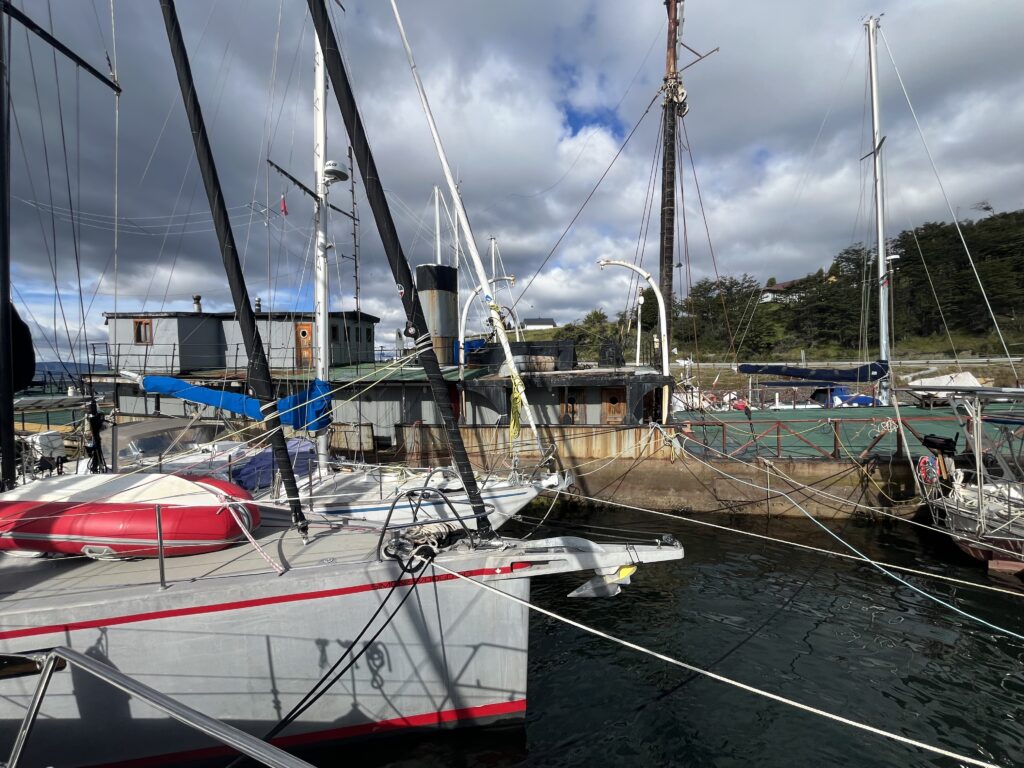
Um 7:00 abends erreichen wir Puerto Williams und stellen fest, dass die Päckchen schon ziemlich dicht sind. Im Nebenarm der Bucht treffen wir auf einen alten Bekannten, den Katameran Alofi. Er hat sich bereits die letzte verbliebene Boje unter den Nagel gerissen, also Ankern wir hinter ihm. Für eine Nacht ist das ok und morgen schauen wir, ob wir vorne einen Platz bekommen. Über Funk werden wir instruiert, uns am nächsten Tag um 10:00 beim „Büro“ einzufinden. Also machen wir nach dem Frühstück das Beiboot klar und wie es nicht anders sein kann, streikt der Aussenborder. Jetzt haben wir aber keine Zeit um uns lange aufzuregen, sondern müssen die Ruder schwingen, damit wir pünktlich drüben sind. „Drüben“ ist ein altes Motorschiff, dass wohl früher auf der Elbe gefahren ist und dann irgendwie nach Puerto Willams kam. Dort wurde es auf Grund gesetzt und dient jetzt als „Mini Marina“ und Steg. Allerdings ist alles ziemlich schäbig und die sanitären Anlagen meidet man am besten. Dort angekommen, sind wir nicht die einzigen und warten erst ein mal gepflegte 45min bis jemand kommt. Damit beginnt der altbekannte Bürokratiezirkus. Zuerst füllen wir x Formblätter aus, dann gehts in den Ort zur Präfektura, zu Customs und zum Hafenkapitän. So sehen wir zum ersten Mal das Ortszentrum von Puerto Williams. Es gibt Geschäfte, Restaurants und einen richtig gut sortierten Supermarkt. Alles klein, aber fein. Zur Feier des Tages genehmigen wir uns ein Mittagessen in einem der Lokale, den ersten Burger in Chile. Zurück beim Boot ist tatsächlich Platz an einem größeren Boot freigeworden und wir legen uns um, mit der Give`r, einer 50 Fuß Alu Yacht unter Kanadischer Flagge, ins Päckchen. Die Eigner sind sehr freundlich und helfen beim Festmachen. Am Abend wird ein Barbecue auf dem Marina-Schiff veranstaltet und wir lernen noch andere Crews kennen. Es ist ein sehr kurzweiliger Abend mit interessanten Gesprächen und leckerem Essen. Die nächsten zwei Tage regnet es und ist scheußlich draussen. So widmen wir uns den Arbeiten im Boot. Ich koche Kürbissuppe vor und backe Brot, während Franz die neuen Feuerlöscher aufhängt und beim Generator eine Dichtung wechselt, da die Kühlwasserpumpe tropft. Am nächsten Nachmittag ist es dann länger trocken und so kann auch der Aussenborder repariert werden. Leider war die Reparatur des Generator nicht von längerfristigem Erfolg gekrönt. Nach Inbetriebnahme tropft er schlimmer als vorher. Problem ist, dass wir keine Ersatzdichtung mehr haben und hier auch nicht bekommen. Eine neue Pumpe muss her. Die Frage ist nur wie. Fischer Panda (der Hersteller unseres Generators) würde von USA aus eine Pumpe nach Chile versenden, allerdings dauert das sicherlich zwischen 6-8 Wochen. Ein Segelkollege, den wir in Piriapolis kennen gelernt haben, kommt Anfang März aus den USA nach Puerto Williams und könnte die Pumpe vielleicht mitbringen. Ausserdem haben wir hier Kontakt zu zwei Locals aufgenommen die eventuell auch helfen können. Inzwischen hat Franz die alte Dichtung wieder eingebaut. Tropft jetzt wieder langsamer. Im Notfall können wir das Gerät schon mal eine halbe Stunde laufen lassen, müssen aber ansonsten etwas sparsamer mit unserem Strom umgehen. Überlebenswichtig ist der Generator nicht. Wenn wir es hier mit der Pumpe nicht organisiert bekommen, fahren wir ohne weiter und bringen das Teil von unserem nächsten Heimaturlaub mit. Morgen geht es endlich weiter. Diesmal wird das neue Ziel nicht vorher verraten, Ihr könnt aber gerne schon einmal spekulieren. Auflösung folgt.
The first few days in Ushuaia fly by with bureaucracy and the usual boat work. The city itself is not particularly impressive, as already mentioned, very touristy and expensive. But the surrounding landscape is all the more impressive. We would have liked to go on a few hikes during our time here, but unfortunately something always comes up. The number of cruise ships that arrive and depart here every day is also impressive. On one day, we counted eight of them in the harbor and bay at the same time
On the other hand, we quickly make friends with our boat neighbors and realize that we are now the smallest boat at this pier. Surrounded by 60-70 foot boats, Amber looks really petite. That’s why we get to keep our spot exclusively to ourselves and aren’t lumped in with the others. I don’t mind at all. Most of the other crews are commercial operators taking customers to Antarctica and South Georgia. Private boats with two crew members are rather rare. In addition, you are asked several times a day if you are taking people with you. Once we actually considered it briefly, but then decided against it. There are a number of requirements to fulfill, and ultimately the skipper is responsible if the passengers do not follow the rules. Besides, we’re not going to Antarctica at all. We would have been interested, but since you need a permit that takes about six months to issue, we don’t have enough time.
After a few days, we decide to rent a car and at least take a trip to Puerto Almanza. The route there is scenically stunning. Puerto Almanza itself is small and consists of 80% restaurants. The rest are residential buildings and small shops. We stop at the most famous restaurant in town to try a local specialty – king crab. The cooked crab is beautifully presented and served with all kinds of tools, and we are given a brief introduction on how best to eat it. The taste is a bit like lobster, but slightly sweeter. And it’s a lot of work for little reward. You can only eat the legs and claws. To get to the tasty meat, you have to crack the shell or cut it open with scissors. What’s more, it’s covered with really sharp little spines. At first, we think one crab might not be enough (although the little creature costs a whopping €100), but in the end, it’s more than enough for both of us. You can’t eat that much of it; it’s like liver sausage, you get sick of it after one bite. Still, it’s an experience. Afterwards, we go for a walk along the water. It really is the end of the world. Rugged landscape and equally rugged weather. Wind, sun, and rain alternate every minute.
We’ve been here for a good week now and the familiar restlessness is slowly setting in. We want to move on. So we prepare everything on Sunday and complete the necessary paperwork on Monday. At our last stop, the prefecture, we are informed that we will also have to undergo an inspection before departure. Personally, we think this is completely unnecessary, but of course we are at a disadvantage. So we march back to the boat and wait for the inspectors. After two hours, we are still waiting. We actually want to leave, so Franz asks over the radio whether someone is coming or not. “Yes, yes, in 5 minutes.” All right, another 5 minutes. They actually arrive and laboriously work their way through their checklist. Everything goes well until they get to the fire extinguishers. But then we are told that these must be serviced annually, not according to the seal on the fire extinguisher itself (not that this was stated anywhere), and that the servicing must be documented. This means we have failed the inspection and have to get new fire extinguishers. Ironically, the inspector also has the right store on site, complete with opening hours. This is a rigged game and nepotism. We are annoyed because we can’t leave here today and have to take care of the fire extinguishers. We also have to repeat the whole clearance procedure tomorrow. On top of that, Roxanna is causing stress because she needs our space for a larger boat. The mood on the day of departure is correspondingly tense, but we don’t let it bother us and finish our preparations in a relaxed manner.
At around half past one, we finally cast off, and the marina office has the audacity to charge us for another day’s fee because we didn’t leave until after 1:00 p.m. They can kiss our ass, we’re not paying anything more. We motor leisurely through the Beagle Channel for 25 nautical miles towards Puerto Williams. Halfway there, we cross the border between Argentina and Chile, which runs through the middle of the channel at this point, and I raise the Chilean flag. This is now the 10th country on our journey.
At 7:00 p.m., we reach Puerto Williams and find that the moorings are already quite crowded. In the side arm of the bay, we meet an old acquaintance, the catamaran Alofi. It has already grabbed the last remaining buoy, so we anchor behind it. That’s okay for one night, and tomorrow we’ll see if we can get a spot at the front. We are instructed by radio to report to the “office” at 10:00 the next day. So after breakfast, we get the dinghy ready and, as luck would have it, the outboard motor breaks down. But we don’t have time to get upset about it; we have to row so we can get there on time. “There” is an old motorboat that probably used to sail on the Elbe and then somehow ended up in Puerto Williams. It was run aground there and now serves as a “mini marina” and jetty. However, everything is pretty shabby and it’s best to avoid the sanitary facilities. Once there, we are not the only ones and wait a good 45 minutes for someone to come. This is where the familiar bureaucratic circus begins. First, we fill out x forms, then we go to the local prefecture, customs, and the harbor master. This is our first glimpse of downtown Puerto Williams. There are shops, restaurants, and a really well-stocked supermarket. Everything is small but nice. To celebrate the day, we treat ourselves to lunch at one of the restaurants, our first burger in Chile. Back at the boat, a space has actually become available on a larger boat and we moor alongside the Give’r, a 50-foot aluminum yacht flying the Canadian flag. The owners are very friendly and help us moor. In the evening, there is a barbecue and we get to know other crews. It is a very entertaining evening with interesting conversations and delicious food. It rains for the next two days and the weather outside is awful. So we devote ourselves to work on the boat. I cook pumpkin soup and bake bread, while Franz hangs up the new fire extinguishers and changes a seal on the generator because the cooling water pump is leaking. The next afternoon, it stays dry for longer, so we can also repair the outboard motor. Unfortunately, the repair of the generator was not a long-term success. After starting it up, it drips worse than before. The problem is that we no longer have a replacement gasket and cannot get one here. We need a new pump. The question is how. Fischer Panda (the manufacturer of our generator) would ship a pump from the USA to Chile, but that would certainly take between 6-8 weeks. A fellow sailor we met in Piriapolis is coming to Puerto Williams from the US at the beginning of March and might be able to bring the pump with him. We have also contacted two locals here who may be able to help. In the meantime, Franz has reinstalled the old gasket. It is now dripping more slowly again. In an emergency, we can run the device for half an hour, but otherwise we have to be a little more economical with our electricity. The generator is not essential for survival. If we can’t get the pump sorted out here, we’ll continue without it and bring the part with us from our next vacation home. Tomorrow we finally continue. This time, the new destination will not be revealed in advance, but you are welcome to speculate. The answer will follow.